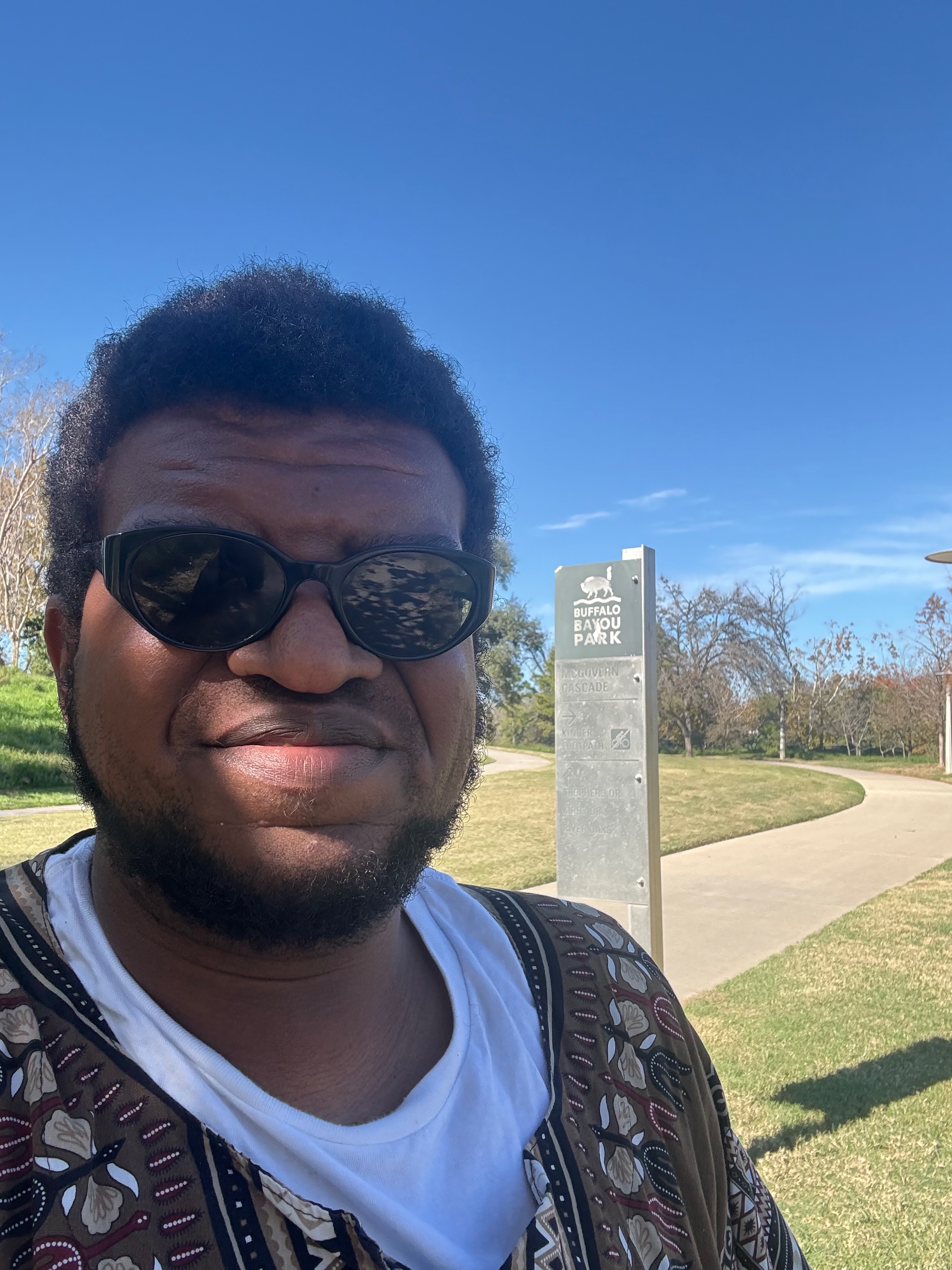
Toward the end of a recent work trip in Houston, I found myself with more free time than I imagined. Rather than rush back to Austin, I parked my rental right off of Allen Parkway and walked along the paths of Buffalo Bayou Park.
Earlier that morning, I grew restless as I refreshed the New York Times app on my phone. I witnessed broken windows, the deployment of tear gas, and brutal assaults – all done by masked police officers in Minneapolis, seemingly with impunity.
I meandered along a familiar small road, having spent time in the same park in the early days of the coronavirus pandemic. In some ways, my grief had abated; in others, it felt more pronounced than ever before.
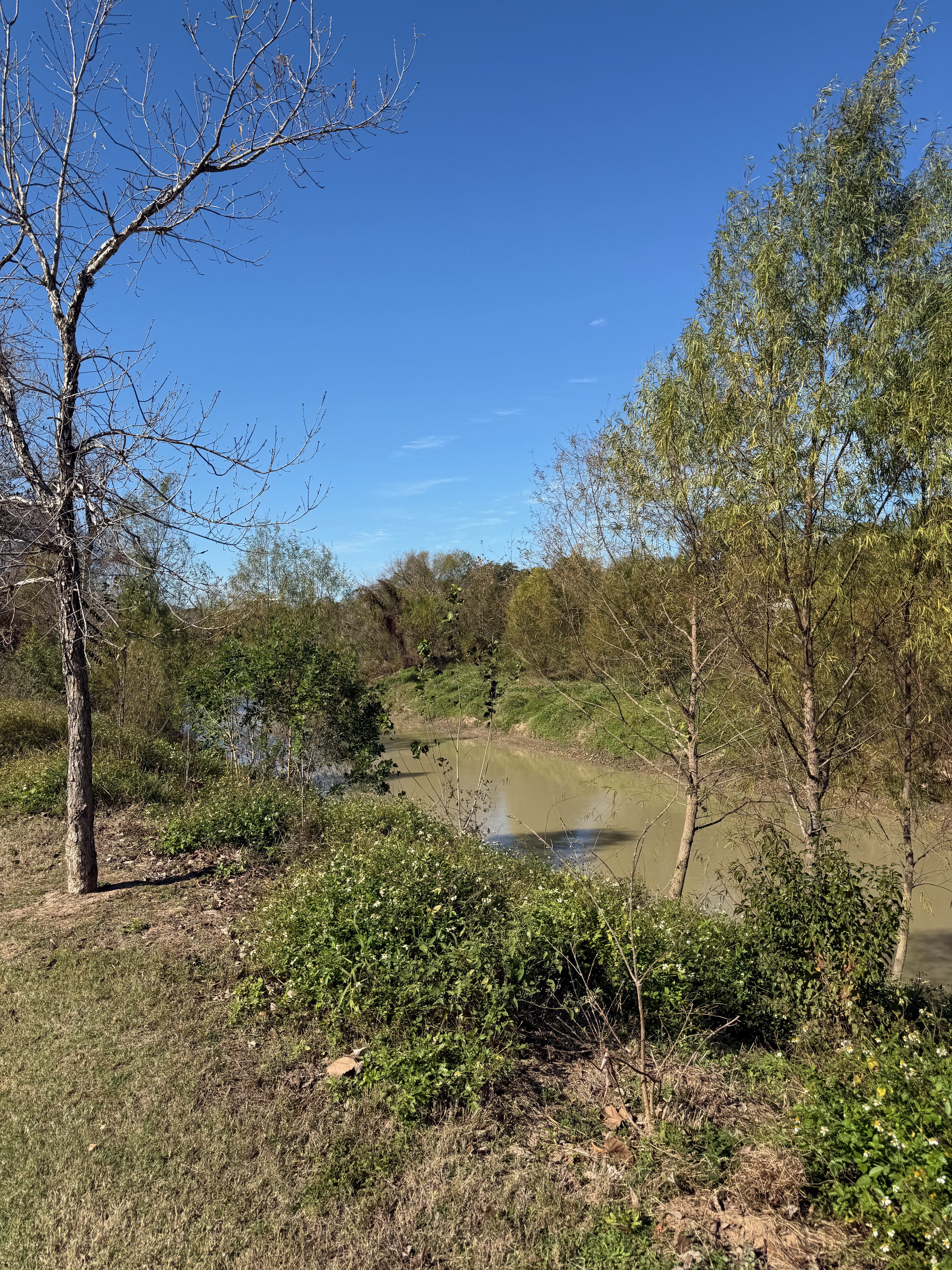
I noticed the murky brown water flowing through the entire space. I knew it held memory in its own way. In its own fashion, it recalled the version of me from March 14, 2020; I appreciated this reality and gave into the continuity of time. What does one do when the world is too painful but go to a park? Six years later, a PJ Morton song plays in my head, and I acknowledge my pandemic-era evolution to truly flow like water through my life.
Houstonians passed me along the trail. The young, the old, the childless, the parent, the focused, and the dreamer converged on this public good during a quiet mid-January day. My soul sparked with each small nod, eavesdropped phone conversation, and subtle smile. We existed in this park together, connected in grand and unknowable ways.
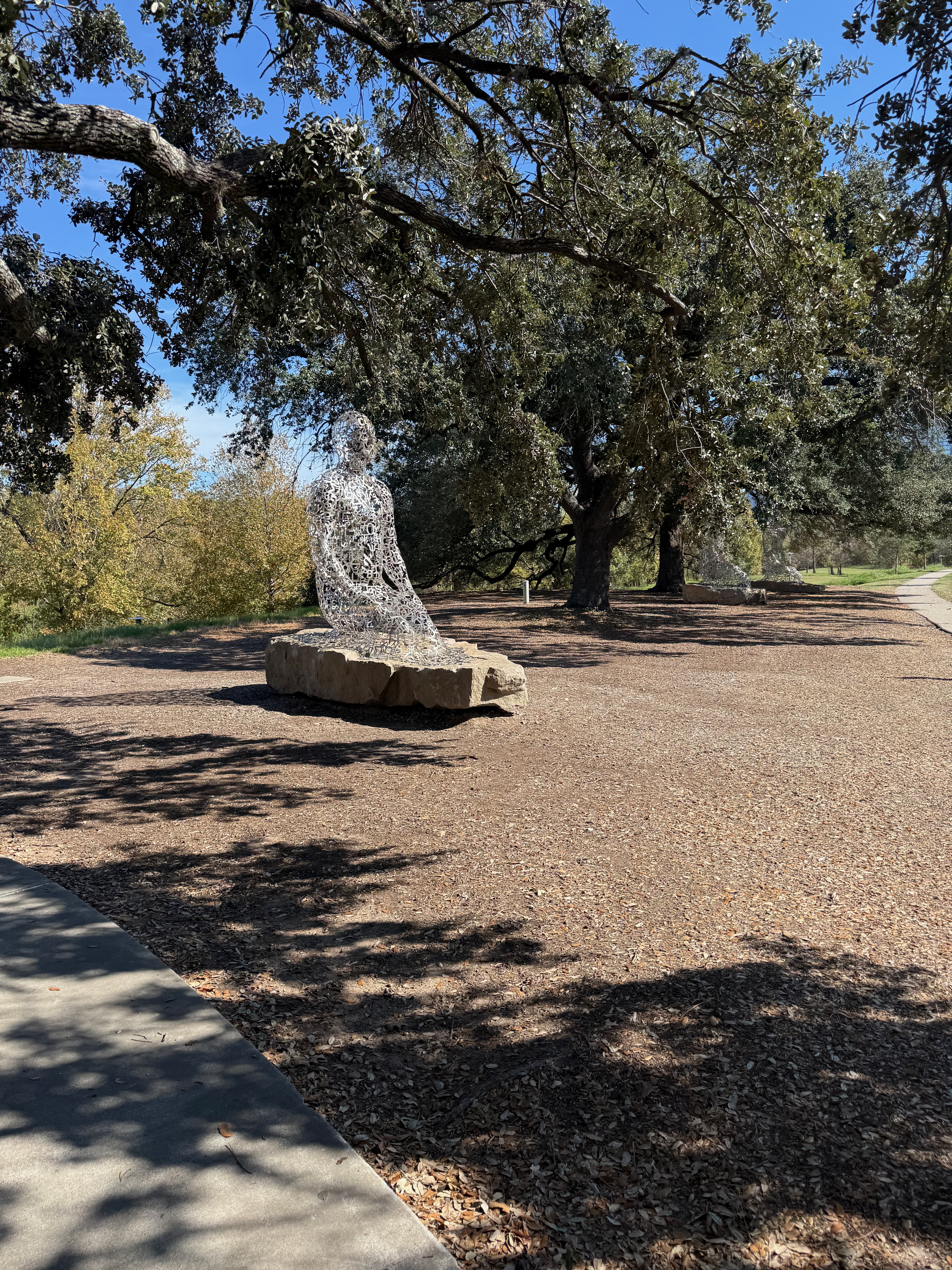
I found a series of sculptures after thirty minutes on my sojourn. What was this meditative, inanimate person trying to tell me? I discovered them in a sequence – alone, but never far from another one. The artist who constructed them undoubtedly and intentionally placed each one. This powerful metaphor pushed me to a suspended spot, high above the ground below.
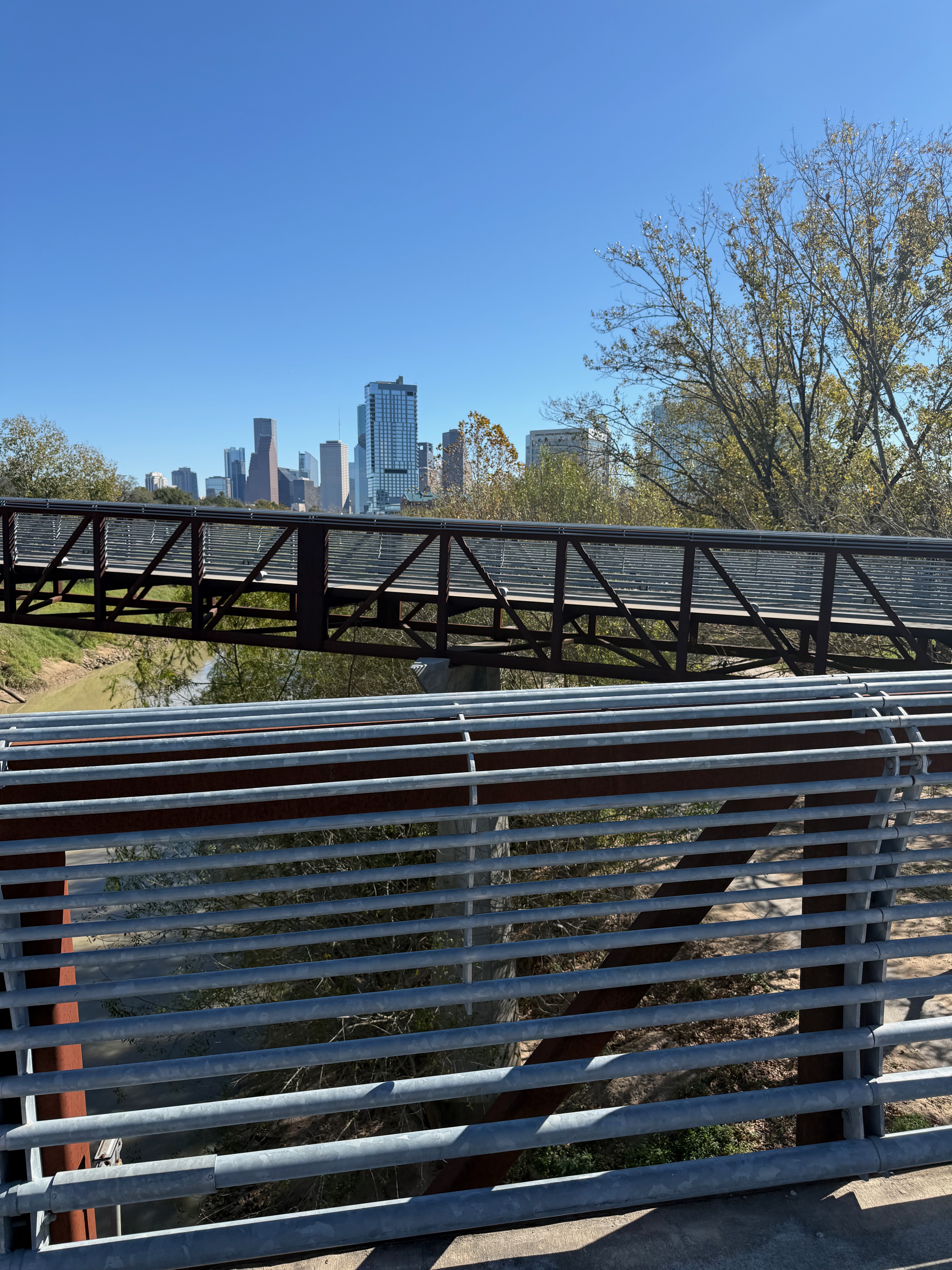
I reflected on the power of a bridge. Its deliberate measurements – fine-tuned at some of the smallest fractions in mathematics – make it easier to reach a desired point. Where could these structures take us if we fully invested in them and leaned into the manner in which they nurture our connectivity? What possibilities could await us if we moved away from walls, fences, and other barriers?
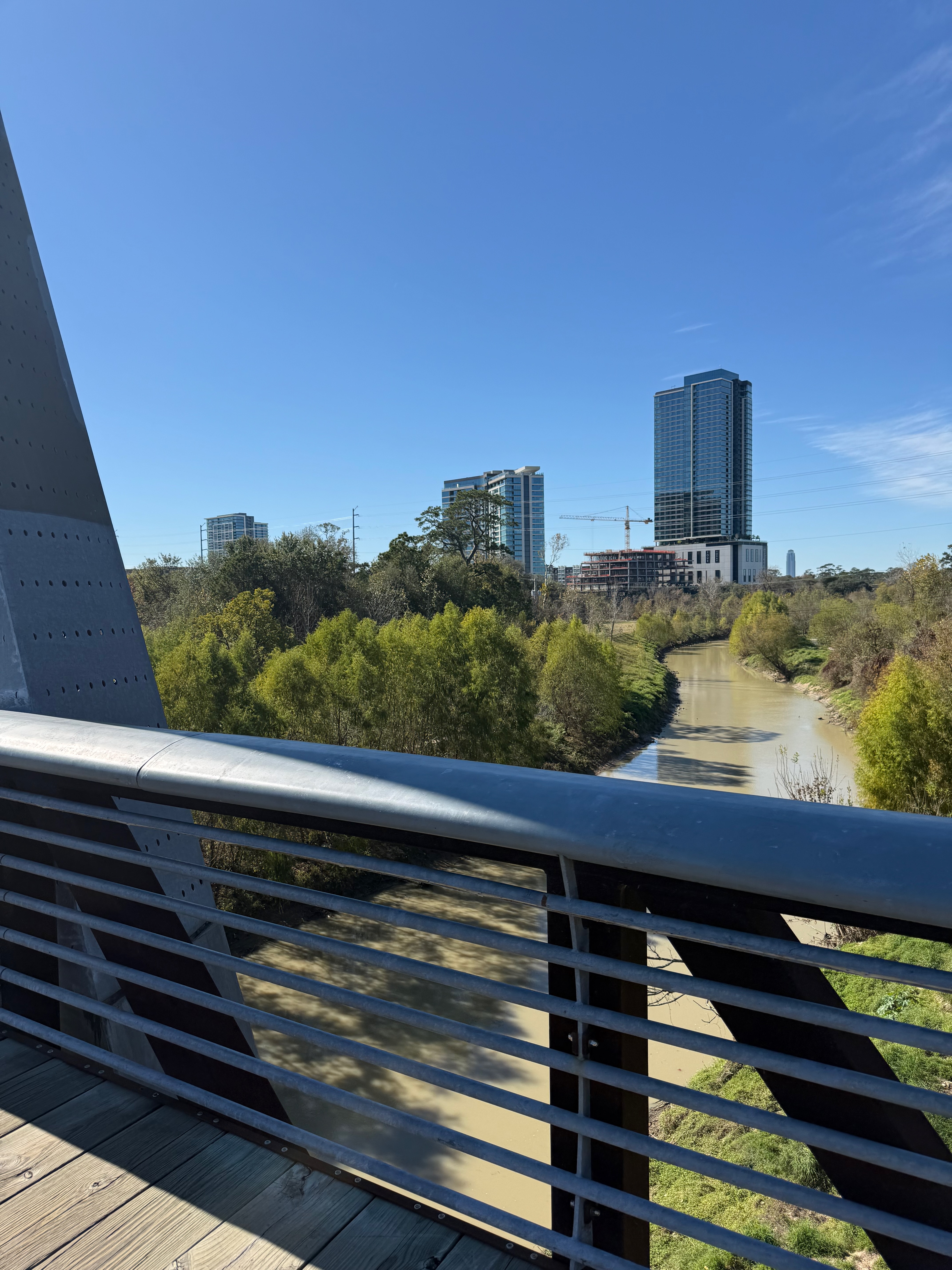
Toward the end of my walk, I behold construction in the distance. It served as a stark reminder of my existence in the heart of the empire, where greed and repression are unavoidable. As the country commemorates its 250th year in July, it continues to extract capital, exploit labor, and export violence across the globe. In 2026, the end goal of this nation’s leaders is to privatize everything — and make working people pay for all that they use. These oligarchs seek to eliminate the diversity that I consistently encountered across a 90-minute stretch and take away the ability for us to gather to celebrate the strength of our diversity.
I complete my time in Houston in contemplation of the miracle of a quiet day in a public park. Despite our collective and individual heartache, scores of people converged with me upon this incalculably important land. We understand intrinsically the need for public goods – a park, a library, a school – that are collectively owned and democratically governed.
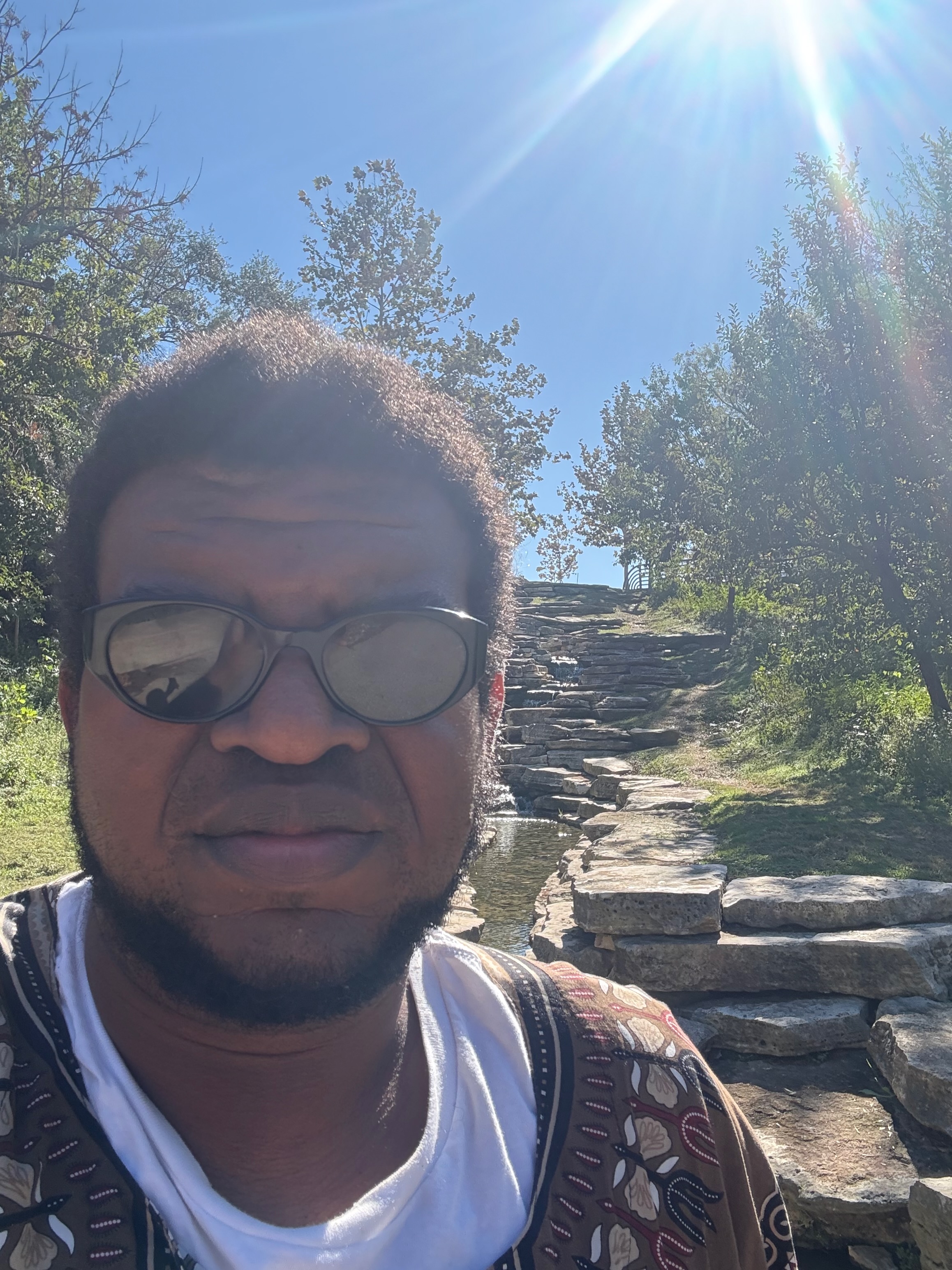
In the heart of one of the largest cities in the United States – in a park – I achieved peace and restoration. Accordingly, I fight for a true public infrastructure with renewed zeal and clarity.


 Andrew Reginald Hairston