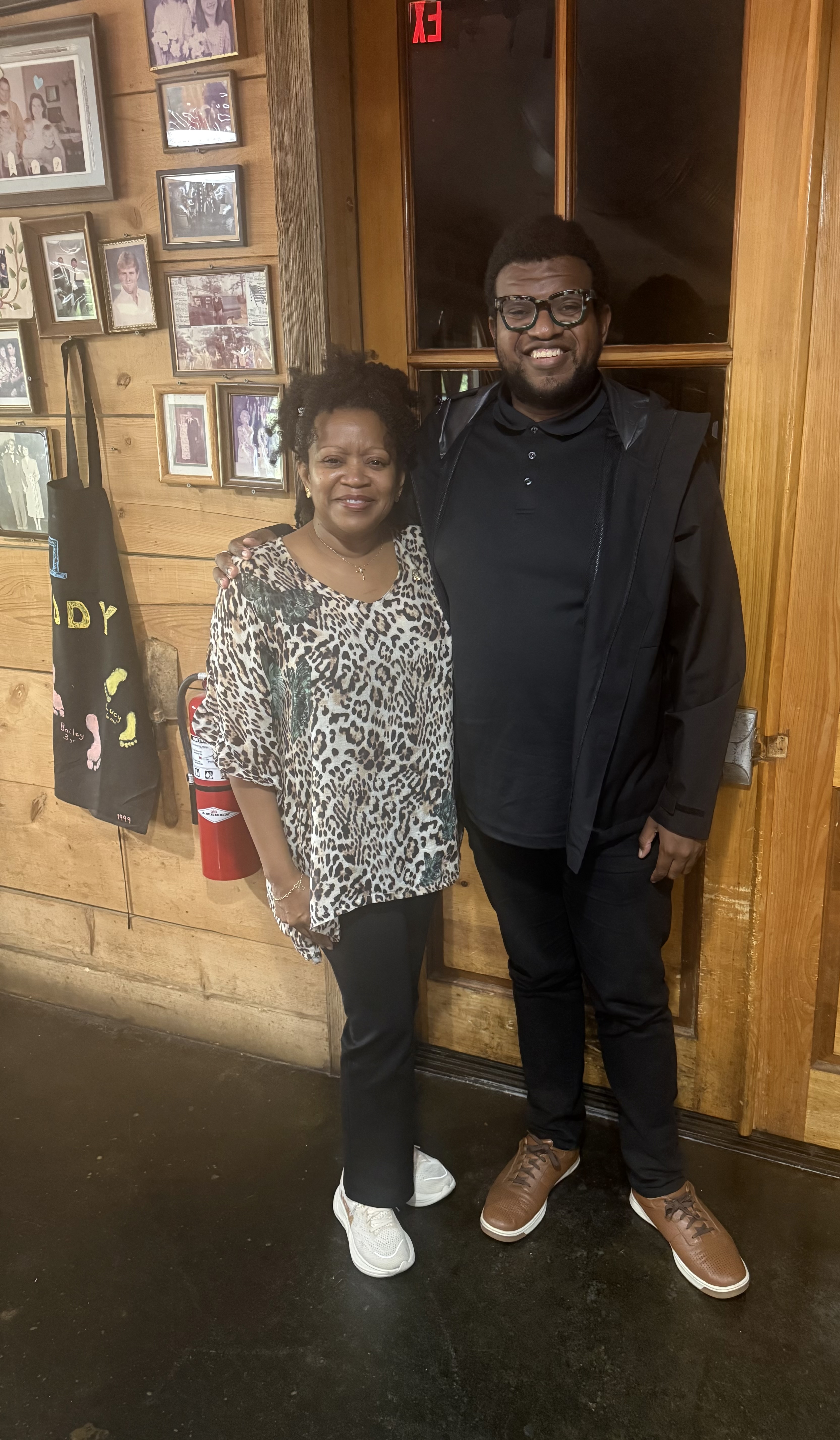
With Uncle Anthony, my father, and my cousin in 2019
Anthony Leon Hairston, 1962-2026
Uncle Anthony, my father’s older brother, died on Thursday, August 6, 2026 in Oklahoma.
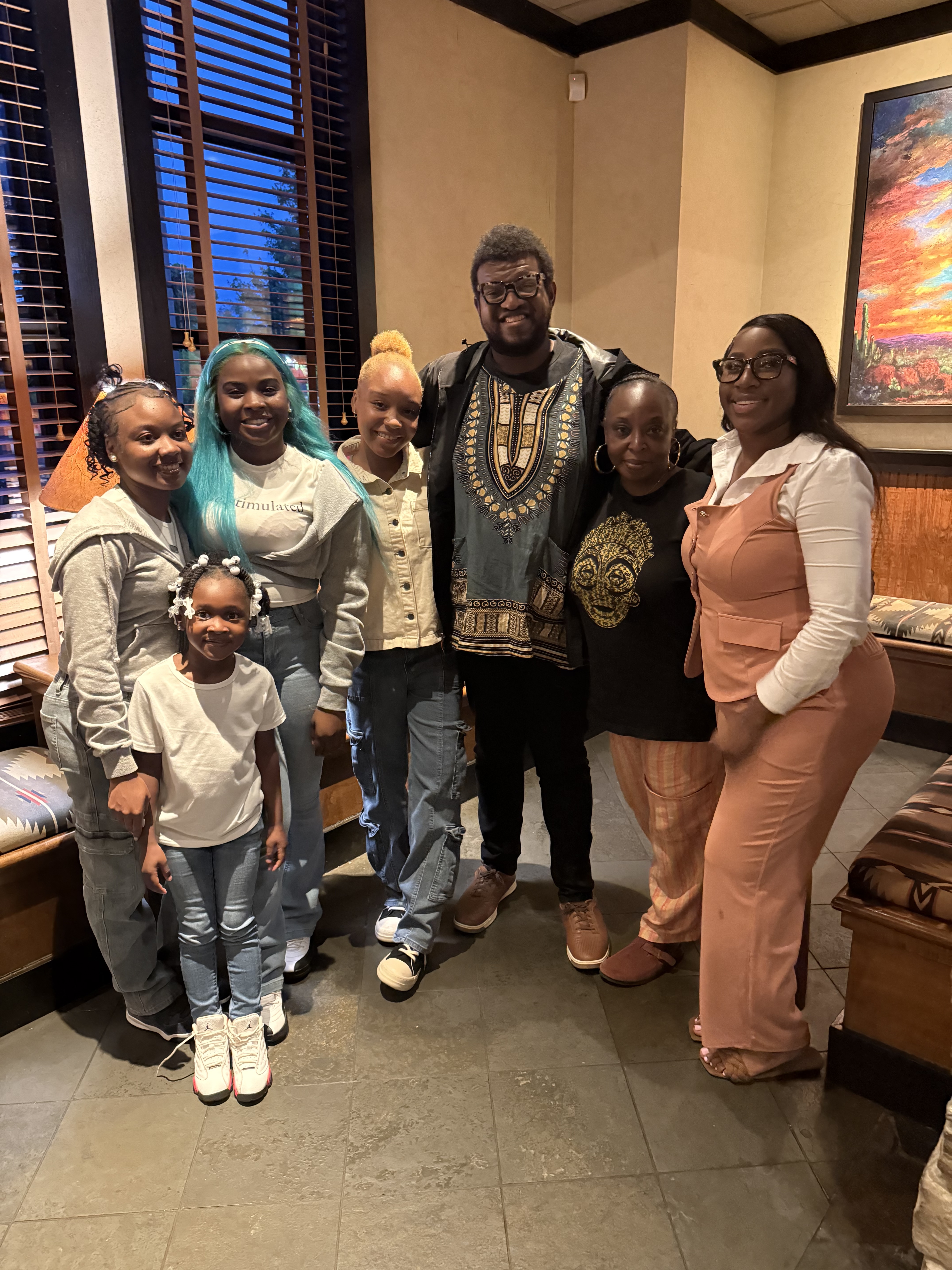
The last time I saw him was on July 20, 2026 – my mother’s 65th birthday. We held the stark contrast and interesting convergence closely. We celebrated two lives that day, with an eye toward the imminent conclusion of one.
Despite the proximity of his death, he – as always – contributed greatly to this particular milestone in the life of our family. He couldn’t speak much at the end. Still, he motivated us with a reaffirmation of his faith, which covered the room in a wave of peace. Uncle Anthony’s hopeful outlook urged my sweet niece to lean more fully into the wonderful characteristics that define her: she greeted hospital staff members as they entered the room and buoyed this spirits of all, especially Uncle Anthony.
***
In the final few weeks of Uncle Anthony’s life, I mentally returned to Grandma Hairston’s home in North Carolina. The most lucid memory of this time must’ve occurred at some point in 2003. Grandma Hairston had just endured the stroke that would leave her pretty immobile for the rest of her life. Uncle Anthony swiftly and dutifully accepted the role of primary caregiver for her with tremendous grace.
During this memorable visit, in a nod to my sister’s growing athletic talent, Uncle Anthony challenged her to a race while we all roamed outside. Each of us laughed so hard as they gave it their all. Although it was close every time, Uncle Anthony kept achieving the victory over my sister.
Soon after Grandma Hairston died in 2007, Uncle Anthony endured a stroke himself. He moved to Ohio, where Grandma Hairston was planning to come permanently. The kinship between my father & Uncle Anthony, as brothers, strengthened. A cycle of care reinforced itself within the family; we brought action to the wisdom of Gwendolyn Brooks – we remained each other’s harvest and each other’s business. He came to Oklahoma in 2010 and lived just a couple miles from my parents’ home for the rest of his days. Other medical challenges arose for him, and he persevered with his kind spirit in clear focus until last Thursday.
In my reflection on the year 2003, and all that came after, his resilience emerged as a recurring theme. In a playful contest with my sister and his countless hours of support to his family, Uncle Anthony conferred the importance of diligence and the preservation of a heart of service. His life represented the truth that the challenges that befall us, particularly Black folks in the United States, can be important avenues for fortifying our resolve & going deeper in our solidarity onto one another.
***
As fluid built up in his lungs and the cancerous cells of stage 4 lymphoma spread through his body this summer, I sat with a paradox. Uncle Anthony, through his powerful example, demonstrated the need to trust in the teachings of the Bible. As a fellow member of ACTS Community Baptist Church, I saw him exemplify the greatest commandment – to love God and love people – with great zeal.
Despite that, a sense of indignation simmers within me. Given my political engagement, I’m acutely aware of the policy decisions over centuries within the United States that led to his death at the age of 64. Uncle Anthony deserved and would’ve benefited from an authentic public infrastructure. I refer back to the cadence of Ecclesiastes and recognize that everything is appointed a season; I believe the absence of an exploitative, privatized healthcare system – fueled by racial capitalism – would’ve given me at least another 25 years with Uncle Anthony. His early death renews my commitment to socialist organizing and mutual aid.
As I contemplate it all & exist in the complexity, I certainly appreciate the model he gave me. When I laugh, the deep bellows bring him to mind. In conversation with my niece, I employ the same avuncular gentleness that he showed me. As I continue to engage in local politics in the American South, I know his life and story will continue to push me forward. His lessons in caregiving already guide me as I begin to offer support to my parents and other beloved elders in their golden years.
I thank God for the 35 years I spent with Uncle Anthony and cherish the spiritual gifts he gave me. Rest in love and power, venerable ancestor; the work continues in your name.
Happy Black August! Much has occurred since my last post, but I am so grateful to commemorate the long arc of the struggle for Black liberation across this entire month.
On an administrative note, I figured out an issue that prevented people from becoming paid subscribers to this newsletter. I certainly invite you to sign up in that way (at the end of this post), especially if you did so for my Substack.
An exciting update from me – along with Dr. Charles Holm and my beloved father, Rev. Dr. Daryl Hairston, I’ll be presenting at the Socialism Conference in Chicago on September 5. We will discuss Black socialist ministers, past and present. The audio will be recorded, and I look forward to sharing more about the panel soon.
***
I believe that Black August first came on my radar in college, but I can’t quite remember. Having attended a historically Black university where I took a seminar in which we robustly discussed the Cuban Revolution, it was only a matter of time before this important month became a fixture in my consciousness. As I went deeper into prison abolition work and socialist organizing, I learned more of important events that occurred in and around August that are integral to the Black radical tradition. The Attica Prison Rebellion, although it took place in September, is a prominent example. As long as capitalism has exploited us, police departments have brutalized us, and prisons have confined us in the United States, Black people have assiduously fought against the indignity.
This summer, I left the non-profit world, in which I worked from 2016 to 2026, and turned 35. In July alone, I went to Oklahoma, Illinois, and Minnesota. In each of these places, as well as in Texas, I experienced grounding moments that prepared me for Black August.
During my birthday trip to Chicago, after a visit to the beach along Lake Michigan, my fellow travelers and I grabbed lunch at a nearby Harold’s. A lovely Black woman exchanged banter with us; she expressed her skepticism about the Trump Accounts and lamented the aggressive immigration enforcement that characterizes this epoch. She talked about her nine-year-old son with pride, and I prayed in the moment that he’ll eventually be free from the violence of police & prisons. I cherished this moment and felt a deep connection with working Black folks, across time, who have called out the insidious cruelty of American capitalism.
On my 35th birthday, which I started in Oklahoma and ended in Texas, my parents, sister, niece, and I enjoyed a nice lunch on Lake Hefner. I thought of the many challenges in our individual and collective journeys through which we’d come. Like other Black people whose ancestors endured the horrors of chattel slavery, we deserve reparations. As I fight for that reality in the coming decades, I thank God for the gift of making irreplaceable memories with other Black folks in 2026.
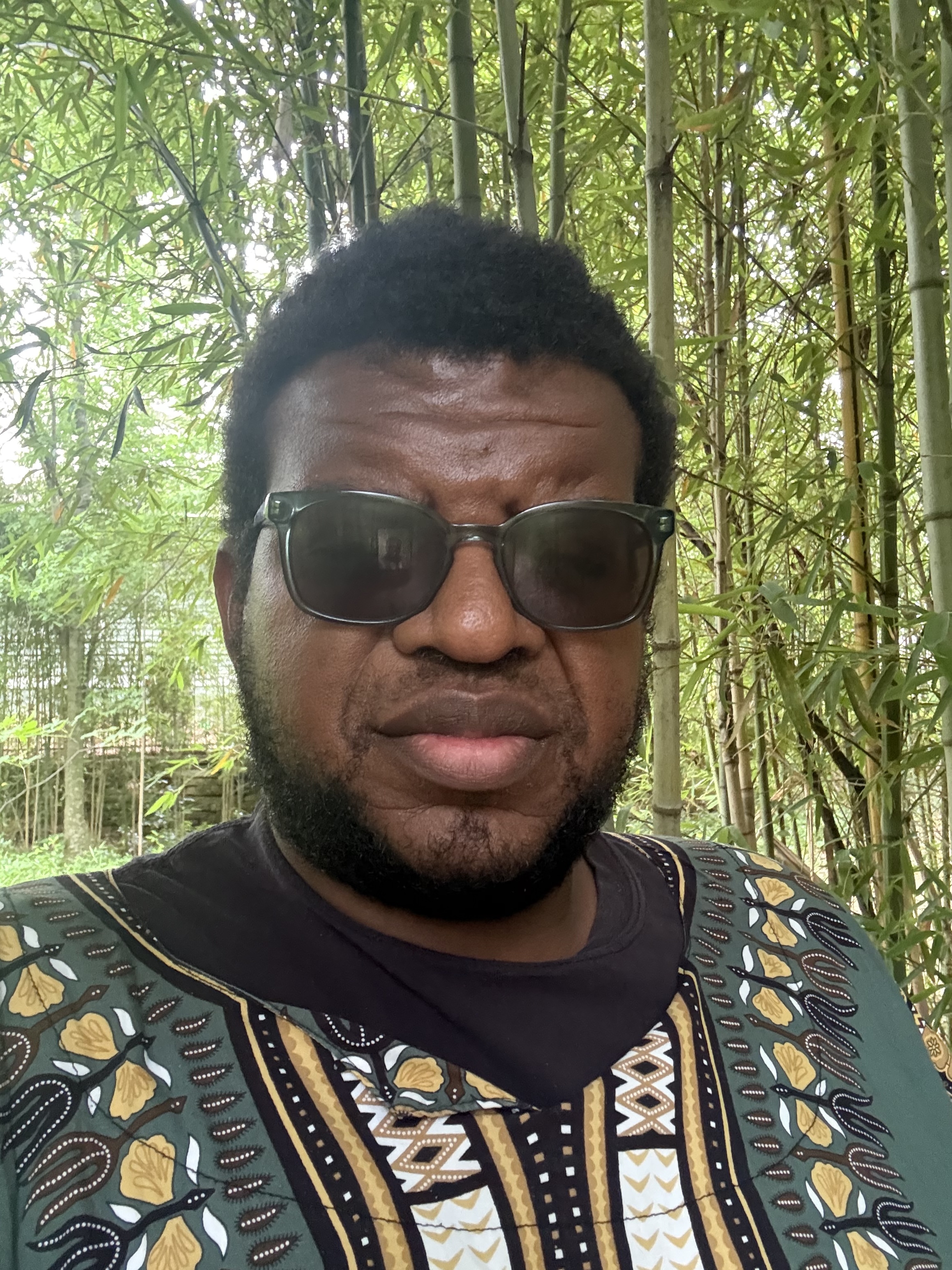
This picture with my beloved niece reminds me of a photo of Kwame Ture laughing with children in Alabama sixty years ago.
In Minnesota, I spent a collective ninety minutes in George Floyd Square on July 24. I felt deep pain and reverence. I mourn the unnecessary loss of our comrade six years later; I marvel at what people in Minneapolis established in his honor. An autonomous zone exists where people can take free clothes, host community meetings, and hear melodious songs. Plants bloom, and a nearby park has an installation that honors Black people who were murdered by the police and lynched across American history. I will write more about the circumstances that brought me to the Twin Cities soon; for now, I just express my gratitude that I could be there and draw further inspiration for what the socialist future will look like.
Back in Austin, I gathered with members of the Afrosocialists and Socialists of Color Caucus of Austin DSA earlier this week as we processed the murder of Anthoneil Williams II, a 17-year-old Black child, by the Austin Police Department. We acknowledged that many of us came into this work through other such tragedies. I remembered Philando Castile and Alton Sterling, who were both killed on my 25th birthday in 2016, and noted that this decade culminated in me becoming a dedicated socialist organizer. We came together for a general body meeting of Austin DSA the next day, and then we rallied at City Hall on Thursday. I expressed my love & appreciation to fellow caucus members for the political grounding we offer one another.
Although there are many sorrows in a country that persists due to the viciousness of racial capitalism, there are also moments of connection and joy. Yesterday, as I grabbed stamps from a post office, two Black workers showed me the available collections. They could see on my face that none of them called out to me; accordingly, one of them asked me if I wanted a book that featured a Black person. I laughed as they handed me a sheet of Muhammad Ali stamps. I lean into that innocuous levity experienced with other Black people in thousands of occurrences during a lifetime.
During this Black August, the Black radical tradition is alive & well. Black folks offer a soft place for one another to land in this harsh world. Local Black politicians, namely Misael Ramos in Austin and Attorney Joy Jackson in Tallulah, seek to build legitimate Black political power through inspiring campaigns. Black organizers convene to discuss the organizing terrain that we’re presently navigating, reflect on the past, and strategize about what’s to come. Black people fortify ourselves through the community and care we find with other Black people. These realities inspire me and make me so proud to be a part of the Black radical tradition.
I delivered a version of this speech yesterday evening as I chaired my first general body meeting of the Austin Democratic Socialists of America. I hope you’ll join us as we do the challenging & enriching work of building the socialist movement in the United States.
***
Good evening comrades—
Welcome to the first Austin DSA general body meeting of the 2026-27 term. Whether it’s your first meeting or your hundredth, you’re right where you’re supposed to be. I’m Andrew Hairston, one of your chapter co-chairs from 2026 to 2027.
The road to the Austin DSA Leadership Committee – much like my broader journey to socialism – undulated. As a child, I received instruction in Black Baptist churches across the American South and Midwest that reinforced that every person deserves authentic dignity simply because they are breathing. Accordingly, I intrinsically fought for housing, healthcare, education, public spaces, and meaningful democratic governance for all across my life – even if I didn’t explicitly call myself as socialist until 2021. In my mid-thirties, I now look back on what I did across the decades – fighting against the death penalty in college and for racial justice after the murder of Trayvon Martin – and recognize that it all fit within the traditions of socialism and Black liberation.
I am well accustomed to the joy & pain of this journey. I ran for office as a proud & open socialist in Texas at the ages of 30 & 34. I technically lost both contests, but I gained so much in the process. I achieved deep clarity that the fight for a true public infrastructure, rooted in the demands of a multiracial, multigender, multinational movement of working people, is where I intend to devote my energy for the rest of my life.
I found a political home here within Austin DSA as I matured. As one of your 2026-27 co-chairs, I am especially so excited to give back to a chapter that has brought so much good into my life. I saw our Afrosocialists and Socialists of Color Caucus come back to life with full force, marching alongside my fellow congregants from Ebenezer Third Baptist Church in the MLK Day & Juneteenth parades. As I testified against draconian school discipline bills in the Texas Legislature in 2025, I existed in parallel with comrades who were speaking up for queer liberation, trans rights, & bodily autonomy in the halls of the Texas State Capitol – and against the corrupt school voucher scam. I joined a picket line organized by Starbucks Workers United, as well as one in front of Rebel Cheese.
I witnessed campaigns like Austin Against Apartheid continue to grow and sustain themselves. That being said, please visit Lau Lau and the other amazing organizations that have signed onto the apartheid-free zone pledge. I beheld initiatives like our neighborhood organizing committees admirably work hard to meet comrades where they are. I’ve seen comrades build relationships, organize, and nimbly respond to the forces of privatization & fascism that characterize this moment. I’m honored to continually do all of these things in my own way, with the recognition that greater depth and breadth await us all.
Whatever brought you in – Palestinian liberation, the need for abortion access for all, opposition to America’s endless imperial wars, or electoral campaigns here in Texas or across the country (Zohran’s primary victory was pretty much a year ago) – know that it is indeed just the beginning. I commend you for taking that step with clarity and conviction to come here tonight – whether in-person or over Zoom – and do the work with other socialists. The educator and prison abolitionist, Mariame Kaba, reminds us of the timeless wisdom that no one does it alone. As you embark upon the challenging, yet enriching work of organizing here with Austin DSA, be reminded that your efforts – no, ours – will yield a better world.
When the world feels exceptionally heavy, join comrades at a socialist happy hour to debrief & unwind. When you need to take a break from cracking the nut of a trickier element of a campaign, run, hike, or play a video game with comrades. When you are tired, please rest and know that comrades got you. When you encounter the inevitable conflict that comes in any human institution, approach comrades on a timeline that feels right and be open to embarking upon roads of vulnerability & repair. I am honored to be with y’all, striving as the imperfect human I am toward the socialist future that I know awaits us. I can’t wait to witness what we’ll do together in 2026, 2027, & beyond. Solidarity forever.
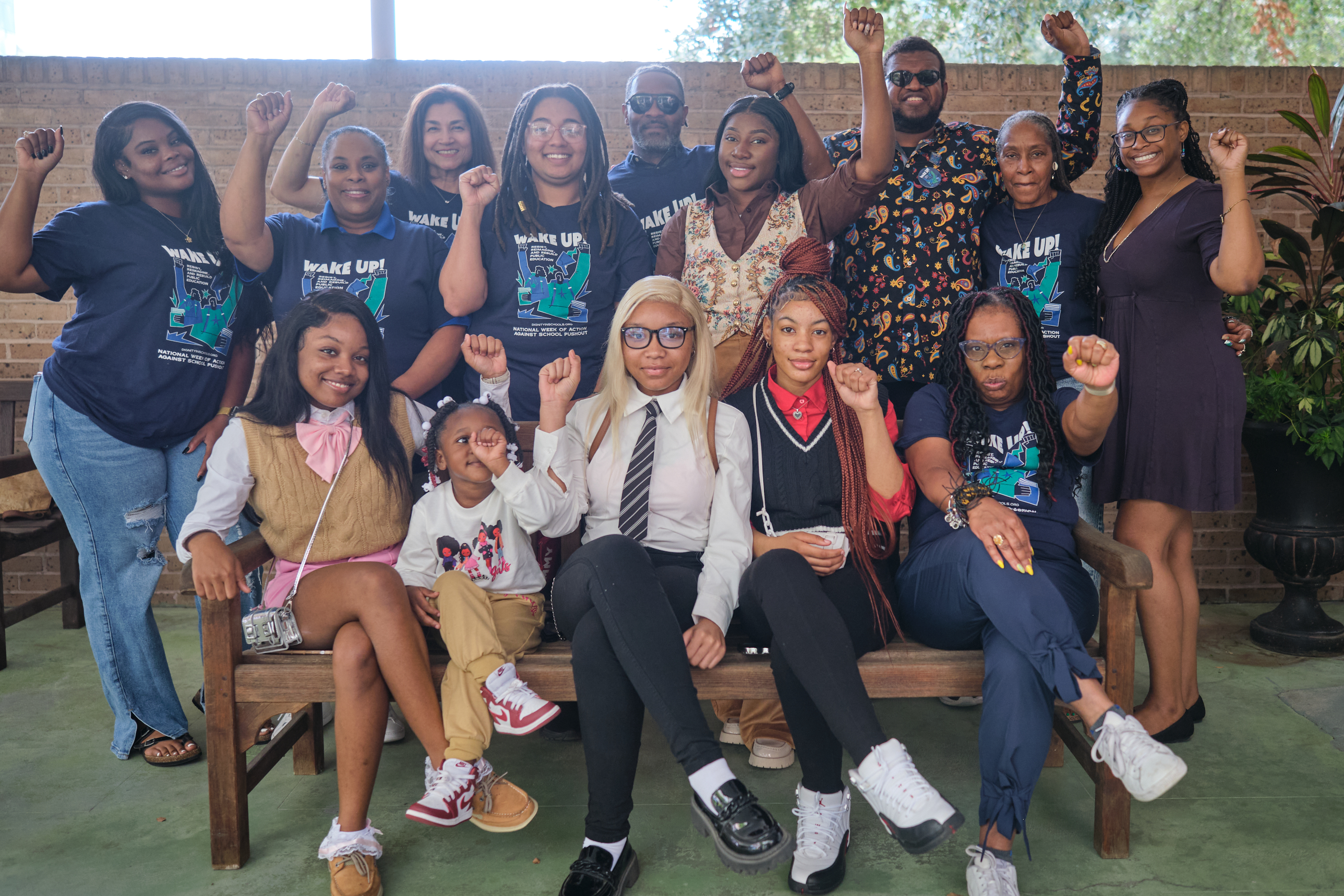
With comrades from the Dignity in Schools Campaign in Houston in 2024 – Photo credit: Tafari Melisizwe
Hello all–
I hope the beginning of summer is providing opportunities to rest and recharge. Since finishing Hammer and Hoe last month, I’ve not stopped thinking of the critical & complicated role played by coalitions in socialist organizing. As I elaborate on my thoughts below, I invite you to become a sustainer of the twentieth anniversary fundraising effort of the Dignity in Schools Campaign.
*****
In Part II of Hammer and Hoe, specifically Chapter 6, Dr. Robin D.G. Kelley reflects on the presence of the Popular Front in Alabama. As the devastation of the Great Depression spread across the American South in the 1930s, the prominence of the Communist Party unfortunately waned. Although the party continually demonstrated its radical politics, rooted in racial justice, membership numbers dwindled, and punitive state tactics increased. For example, the party’s support of a strike of Birmingham’s laundry workers, involving twelve hundred to fifteen hundred Black women, resulted in stunning violence against the workers and party members. Comrades can only take so much.
Facing these conditions, the Communist Party expanded its net in 1935 to “include liberals and all progressive forces.” As this broader coalition emerged, the party widened its messaging. The leadership of the party, in response to Italy’s invasion of Ethiopia in 1935, “elected to drop its slogan of self-determination in the black belt and concentrate on civil rights and discrimination as unifying issues in the black community.” Such alliances sustained the party for a bit longer, but history ultimately played out in a damning way for the twentieth century Communist Party in the United States. One such unit of this alliance was the NAACP. Despite leaders of the legacy organization decrying communism and refusing to directly address the exploitation that Black people endure under capitalism, many radicals eventually found themselves within the ranks of the NAACP ninety years ago. The NAACP adopted direct action tactics, gained popularity, and saw its numbers grow where the Communist Party’s fell.
This portion of the book inspired so many thoughts. From 2016 to 2026, I worked at three American non-profits as I sought to dismantle the school-to-prison pipeline. Across this time, coalitions consistently informed my efforts. In 2017, I first encountered the Dignity in Schools Campaign and commenced my service on its coordinating committee. Later that year, I connected with advocates in New York who sought to enshrine legislative changes in state law that would have limited exclusionary discipline and incorporated more restorative practices in classrooms. I began journeying to New York City and Albany a few times a year – and ultimately became a facilitator of the group. A few years later, in 2020, I started a coalition at Texas Appleseed – in collaboration with education justice organizers at other 501(c)3 organizations – to respond to the unique detrimental effects of the coronavirus pandemic on public schools in the state. That coalition morphed into one that focused on legislative work, across various sessions, to end exclusionary discipline & school policing Texas. I also rejoined the coordinating committee of the Dignity in Schools Campaign in 2022.
With history and my own life in focus, I am admittedly conflicted. I was so inspired reading Hammer and Hoe, feeling a kinship with thousands of comrades nearly a century ago who organized under the banner of the Communist Party. I wish the party could’ve continued its growth trajectory then. However, I realize why the comrades ultimately chose to forge alliances, even if the strength of the Communist Party wasn’t guaranteed after a certain point. It was – and remains – important for the radical ideas to live on wherever they can receive oxygen. Given all that has occurred in the world in the past two centuries alone, I certainly empathize with people who are reluctant to claim communism & socialism as a personal political framework. Coalitions provide a helpful way to connect, even when people disagree on certain terms.
Presently, I recognize how many coalitions can get bogged down with administrative obligations, struggles with authentic democratic engagement, and uneven resources across individual member-organizations. As I departed from the coalition in New York, I forgot to transfer ownership of the Google Group to another comrade in the space. I could only hope that this hiccup of logistics wasn’t too disruptive. As a big guy with a large personality, I’m also wary of taking up too much space in coalitions. These realities of my past deeply inform my current job as co-chair of the Austin Chapter of the Democratic Socialists of America.
Despite it all, I still feel drawn to the work of maintaining & strengthening coalitions. The Dignity in Schools Campaign grounded me early in my legal career and conferred important political education upon me. Through my organizing with Austin DSA, I have been consistently impressed by our work with the Austin for Palestine Coalition. From weekly Palestinian flag drops from the 12th Street bridge above I-35 to community teach-ins, I currently see how coalition politics can effectively pave the road to a better world. Although I don’t have all the answers about coalitions, I lean into their possibilities to bring more people into socialist organizing, drawing us ever closer to true human dignity for all.
I hope the summer is off to a steady start. It is a big season of transition for me. After seven incredible years, I’m concluding my time at Texas Appleseed on June 26. I’m filled with pride, gratitude, and peace as I reflect on the past decade that I’ve spent as a civil rights lawyer.
Tomorrow, I begin my term as the co-chair of the Austin Democratic Socialists of America. I’m excited to pour into an organization that has given me so much. I invite you to join DSA, and I look forward to sharing more updates about our work over the next twelve months.
On this quiet fifth Sunday, I offer a piece that I initially penned right after the 89th legislative session in Texas in 2025. I recently testified before the Texas House of Representatives (start around 6:44:00) for very likely the last time, which brought this essay back into focus. I remain thoroughly convinced that Jesus firmly rejects exclusionary discipline.
*****
In 2025, I concluded the third regular legislative session I’ve worked in Texas. Although policy advocacy always brings demanding obligations, the 89th legislative session felt particularly grueling. As the Texas Legislature was gaveled in, both in 2023 and 2025, policymakers debated – and ultimately passed – prominent bills related to school safety and school discipline. Across years, my team and I presented deeply measured and evidence-based arguments against increased investments in school policing and the calcifying of zero tolerance in school discipline. Unfortunately, HB 3 (2023) and HB 6 (2025) became law, bringing numerous harms with them to children and families across Texas in the process. HB 3 mandates a school police officer on every campus across the state, and HB 6, most simply stated, eases pathways to disciplinary alternative education programs for young Texans.
As last summer dawned, I thought of the various arguments that I employed to oppose these draconian policies. In a meeting with Chairman Jeff Leach, the primary author of HB 6, in February 2025, I conveyed that I am a man of faith as well – and I bring that identity into my work to ensure that every child feels nurtured & supported on their school campuses. We participated in a passionate exchange, but it was clear that his philosophy is that some kids need to be outside of the classroom. I sat back and let out a long sigh in his office; I thought of how the Clinton Administration boasted about funding 100,000 police officers across the country, and I reflected on my advocacy against HB 3 in the previous legislative session in 2023. The bipartisan commitment to militarized schools remains strong.
After Sine Die – the official end of the legislative session on June 2, 2025 – I turned back to my work within one of my congregations, Ebenezer Third Baptist Church, with greater zeal. Along with a group of committed Black women leaders, I teach a class called Christian Education Discipleship Ministry (CEDM) for kids in grades one to six each Sunday. Reflect back on the Sunday School hour of your youth and you’ll get a good picture of how CEDM operates.
On June 29, 2025, Ebenezer held its annual Children’s Missions Day program. I delivered a sermon from Hebrews 11:1 and Proverbs 3:5-6, focused on how change is constant. In a parallel structure, one of the brilliant kids from CEDM, Basil, delivered a lay message on the same topic. In witnessing Basil’s impactful remarks, I saw the model of intergenerational organizing that I’m seeking to build in clearer focus. I introduced Basil to the congregation, lauding the fact that – at then-nine years of age – he understands concepts like disenfranchisement and injustice. Basil’s inspiring speech reassures me that Black children are well positioned to articulate the vision of the Earth they deserve to inhabit.
During my remarks, I honed in on the experience of Jesus in the Garden of Gethsemane, as recorded in Mark 14. As I uplifted the fact that change presents each of us with an opportunity, I reflected on the fact that Jesus experienced deep distress and trouble as he approached his fate on Calvary. I uplifted – and found solace – in the words that he offered soon after: everything is possible with God.
I grew emotional during the end of my remarks because I recognize the continuity of many things. Change is constant, as well as the fight for Black liberation in the United States and the organizing effort to unite the working class against the exploitation of capitalism. As a man of faith, I hold on to the inspiring and loving ministry of Jesus to guide me through the challenges of this journey. Moreover, as each year passes, I receive stronger confirmation that Jesus – who instructed us to love our neighbor as ourselves – would be fighting alongside me to dismantle the school-to-prison pipeline if he were physically here. In that moment of distress in the Garden of Gethsemane, Jesus received grace and assurance from God; children across the United States should feel empowered to draw from this example, even when they’ve made mistakes in school. Children, especially Black children, deserve abundant compassion on their campuses.
For lawmakers like Chairman Leach, I implore you to spend time with the message that Jesus expressed across the Gospels. As I go deeper into ministry myself, a message does not leave me: no one is disposable, and everyone has access to the life-changing salvation that Jesus offers.
For Black people, especially Black children, in 2026, I urge you to show up with your full selves as you fight back against the perniciously evil effects of racial capitalism. Despite the obstacles put into place by these regressive laws, I believe deeply that a better world awaits us. Jesus, through his radical inclusion, fortifies us in our righteous efforts to attain that dream.
I write from McAllen, Texas, where I’m wrapping up a board retreat for Frontera Fund. I’m so thankful to be among comrades who are fighting to expand abortion access & reproductive care for all. I raised a couple thousand dollars for the ’26 Fund-A-Thon of the National Network of Abortion Funds this spring, and I encourage you to donate to your local abortion fund before May 31.
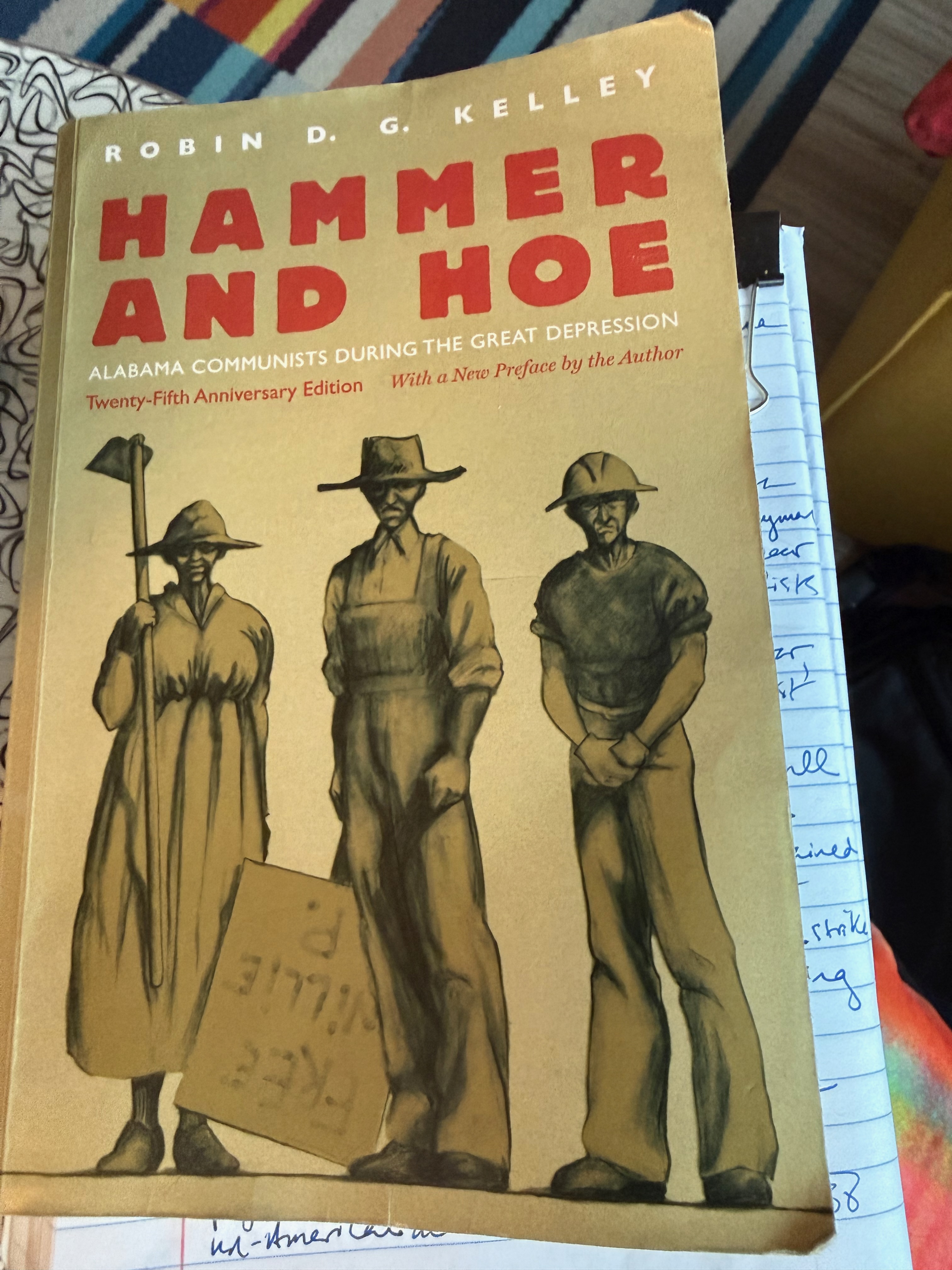
I finished Hammer and Hoe: Alabama Communists During the Great Depression by Robin D.G. Kelley last night, and I’m motivated anew. I hope you’ll enjoy this reflection; I know I’ll be returning to this text quite a bit in the coming decades, and I look forward to witnessing how it will, in different phases of my life, inform my socialist organizing. If you have read it – or plan to read it – feel free to reach out to further discuss it with me.
*****
Dr. Robin D.G. Kelley initially published Hammer and Hoe in 1990, as the Soviet Union fell. Despite that irony, the timelessness of the piece emanates from its pages. Dr. Kelley first sets the tone of the class war in Birmingham in the nineteenth and twentieth centuries; a militant, multiracial labor force fought against the greed of the Tennessee Coal, Iron, and Railroad Company – a steel and iron manufacturer – in the years after Reconstruction. Sharecroppers, tenants, and many other working Black people deeply felt the pain of exploitation and racial capitalism, and they sought to direct their indignation into revolutionary action.
The Communist Party planted its seeds as the stock market crashed in 1929; it grew from three organizers in 1929 to over ninety in 1930. At the beginning of that decade, over five hundred people belonged to the party’s mass organizations, and over 80% of these comrades were Black. They labored and organized diligently. Within the next year, on November 7, 1931, the Communist Party held a demonstration in Jefferson County, Alabama that attracted an overwhelmingly Black crowd of five to seven thousand people.
This number truly inspired me. As the Great Depression set in, many comrades were forced deeper into poverty; by 1933, 26,000 Black folks in Birmingham, about 27% of the city’s population, received welfare. Still, comrades gathered, raised their voices against injustices, and brought more people into the fold with each passing month. I smiled as Dr. Kelley illustrated the growing tenacity among the people who were getting radicalized in that moment; in reflecting on the police violence that met thousands of protestors in Ingram Park in Birmingham on May Day 1933, Dr. Kelley conveyed that one Black woman, who had a gun shoved into her body by a police officer, proclaimed that if she was shot, a thousand more would be. At a Communist Party meeting the next day, a group of Black women expressed their excitement – and continued interest – in going toe-to-toe with the racist police force.
As democratic socialists are doing in the twenty-first century, the Communist Party engaged in sustained labor organizing. Sharecroppers formed the Sharecroppers’ Union (SCU) in 1931, and they immediately postured themselves to fight landlords & the government. They executed a cotton-pickers’ strike in 1934 that yielded an increase of wages of seventy-five cents per one hundred pounds of cotton on affected plantations, as well as an increase from thirty-five cents to fifty cents per one hundred pounds of cotton on unaffected nearby plantations. Comrades commemorated this success as they faced kidnappings, beatings, and mass evictions – all while contending with the availability of an expanded pool of cheap labor during the strike. Ultimately, at least 45 strikes, involving over 84,000 workers, occurred in Alabama during 1934.
Dr. Kelley also reflects on the relationship between Black churches and the Communist Party during the Great Depression. Although few Black pastors actively supported the party, some did. Dr. Kelley noted that Reverend George W. Reed of Forty-Fifth Street Baptist Church used his voice as an elder Black clergyman to emphasize the need to be in solidarity with poor folks and build the labor movement. Reading this instantly made me think of my beloved father, Reverend Doctor Daryl Reginald Hairston of ACTS Community Baptist Church in Oklahoma City, who regularly calls out the evils of capitalism in his sermons in 2026. Black Communists who organized ninety years ago recognized the importance of collaborating with the church to reach more people and strengthen their finances during a time of austerity; I personally view my work with fellow democratic socialists in Austin and Baptist churches in Oklahoma & Texas as the two primary pillars of my organizing. Hammer and Hoe reminded me of the importance of going deeper on both fronts in the coming years.
As the Great Depression proceeded, challenges mounted for the Communist Party in Alabama. Increasing anti-Communist sentiment eventually resulted in legislative proposals from the Alabama Legislature that would’ve made labor unions liable for property damage sustained during a strike. The government’s antagonism against the Communist Party arguably culminated in Congressman Martin Dies launching a special committee on un-American activities in 1938. To combat the dwindling numbers of the rank-and-file that accompanied these coordinated attacks, the Communist Party explored more coalitions. Notably, on December 6, 1934, Communists and Socialists from five Southern states released a platform that focused on fascism, particularly lynching, antilabor terror, white supremacist organizations, and sustained opposition to most New Deal policies; they supported Southern unionization, undergirded by racial and gender equality. The Alabama Legislature eventually dealt a final blow to the Communist Party by passing the Communist Control Law, but the willingness of the Communist Party to form coalitions guaranteed that its important ideas persisted in successive decades.
Comrades also faced steady criminalization as the years passed. Using section 4902 of the Birmingham criminal code, which permitted the police to detain people for up to seventy-two hours without a warrant, the police targeted Black comrades like Helen Longs. As she distributed Communist Party leaflets with election information, the police arrested her. They held her for disorderly conduct and beat her to the edge of consciousness. The horrifying story mentally transported me to my current work to dismantle the school-to-prison pipeline in Texas, which includes a recent change to state law, as of 2025, to make it easier to remove students from the classroom for being ‘disruptive.’ The police also used conviction records of comrades to deflate organizing efforts, as they arrested Clayton Norris for a parole violation during a strike against the Works Progress Administration. In response to Black parents of the Ensley Council School who engaged in a boycott to unseat a corrupt principal, the board of education and local police department stepped in and punished the boycotters for truancy; this story made me especially grateful that I further politicized the role of Justice of the Peace in Texas, which handles truancy referrals, during my two campaigns in 2022 and 2026.
Finishing this critically important book certainly left my mind racing. As a socialist who has engaged in electoral work over the past four years, I recognized a connection between my efforts and the community organizing that took place nearly a century ago. I received 9,633 votes in my last run for Justice of the Peace in Precinct One of Travis County, Texas; roughly that number of people belonged to the SCU by the summer of 1935. The Communist Party never achieved an electoral victory in Alabama, but it followed a trajectory from an underground movement in the early 1930s to “a kind of loosely organized think tank whose individual members exercised considerable influence in local labor, liberal, and civil rights organizations” by the 1940s. I am most inspired by the Black Communists of this time period who engaged in multifaceted work, establishing relationships with churches, pushing for political education of union members, and generally building their ranks. Their legacy was beyond apparent thirty years after the Great Depression, when a young Stokely Carmichael encountered enthusiastic and armed Black farmers in 1965 in Lowndes County, Alabama. The radicalism of the Communist Party in Alabama during the Great Depression lives.
I’ll conclude for now with my general appreciation for this tome’s existence. I very likely will return in the coming months with a deeper reflection on the complicated, necessary coalition politics that the Communist Party navigated. A deeper exploration of that work could prove to be quite instructive for the contemporary moment.
Happy May Day! The cause of labor continues to be one of the greatest sources of hope for the world. I pray you’ll get to gather with comrades today and reflect on the long arc of solidarity built by multiracial workers across nation-states. Our protesting, rallying, and organizing will never be in vain, and it flows from a rich tradition.
I returned from a two-day work trip to Mississippi yesterday evening, and I’m excited to share this dispatch.
*****
Last week, I confirmed the logistics of a sojourn to Mississippi with Ruth, and my soul buoyed with joy and anticipation. After meditating deeply on the century that has passed since Grandma Jackson was born, I knew it would nourish me to visit the state where she began her journey. Through my work with the Dignity in Schools Campaign, I’d come to view it as the site of struggle, contemplation, and possibility it fully is.
I landed around noon in Jackson, and I picked up the rental car without much fuss. Ruth took the train up from New Orleans, and I had a few hours before she would cross through the threshold of the downtown Amtrak station. After a quick lunch, I decided to return to the home of Eudora Welty, which I had visited during my last work trip to Mississippi in 2023.
I meandered through the grounds, recalling the time I picked up The Optimist’s Daughter in D.C. nearly a decade ago. Having attended a writers’ group the previous evening, I drew inspiration from a strong example of a beautiful environment where a writer created their art.
I continued inside.
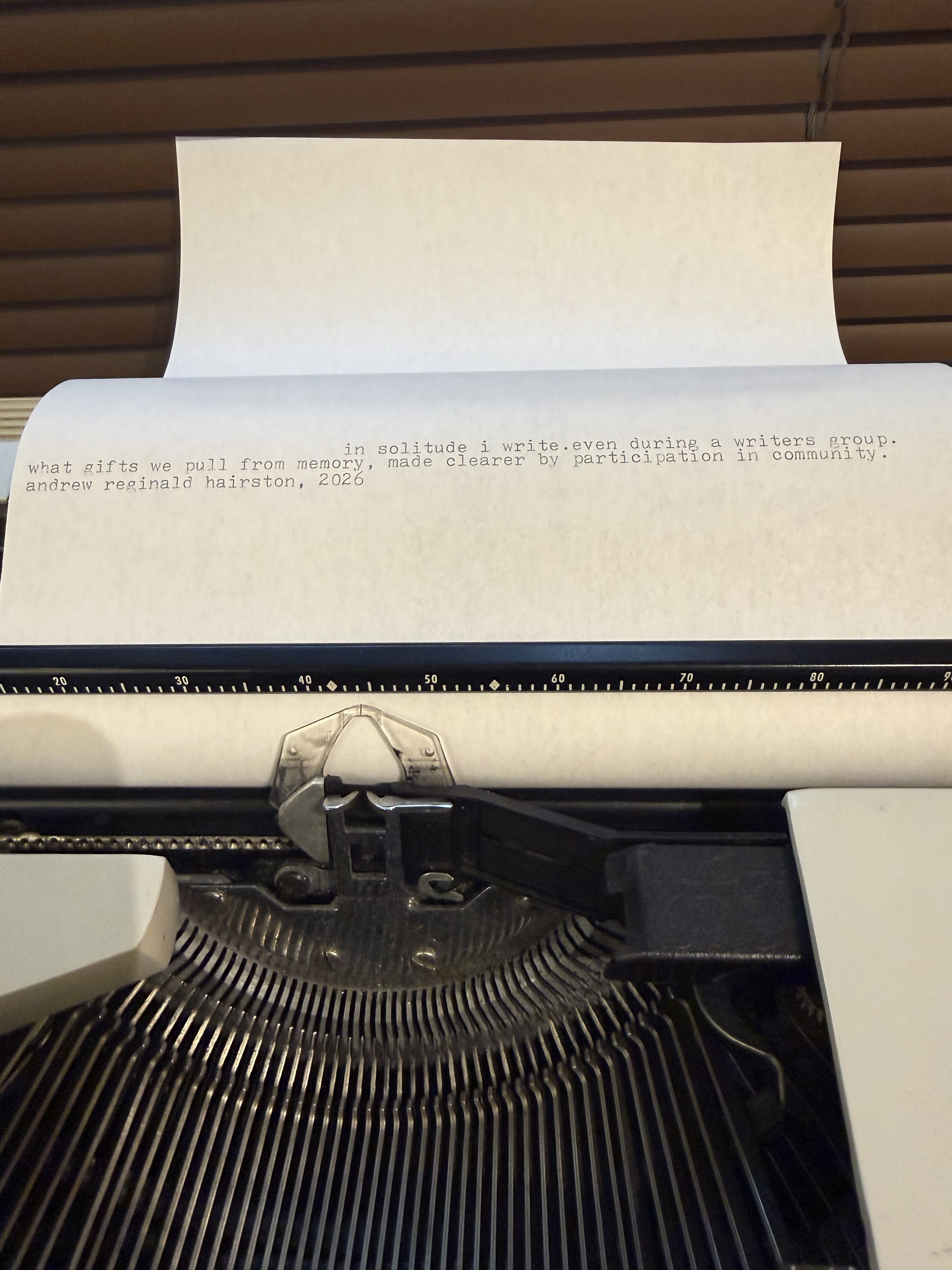
I enjoyed a playful session on a typewriter, feeling called to create for no other reason than honoring the fact that I can.
Ruth made it to Jackson safely. After we checked into the hotel, she and I grabbed dinner with several phenomenal young Black women in Madison that evening. We caught up on what had occurred in the eighteen months since our trip to Houston and broadly discussed the organizing terrain for racial justice work in 2026. Kameisha shared how they’d been recently invited to convenings that sought to extract traumatic memories from young people, rather than meaningfully incorporate their perspectives into legal, policy, communications, and advocacy strategies to dismantle the school-to-prison pipeline. We recommitted to the work and ourselves, striving toward democratically governed public schools in the American South, all without a police presence.
The next morning, following an exceptionally delicious breakfast at IHOP, Ruth and I drove one hour north to Durant. For years, I’d admired the impactful community work of Nollie Jenkins Family Center. I felt so honored to plant my feet on the ground there. I met Royalty for the first time in-person, filled my plate with delicious home-cooking, and proceeded to chat with comrades for four hours. We strategized, hypothesized, and dreamed. Dianna Freelon-Foster made us laugh so hard; I thanked her for the grounding of our presentation on Black Socialism and Solidarity at the 2024 biennial meeting of the Dignity in Schools Campaign. Ellen Reddy demonstrated her innovative approach to land stewardship and intergenerational care. I recognized the gift that I’d been given as a lawyer who is fortunate to work with a member-based coalition; litigation and administrative advocacy rightfully take the back seat, as authentic relationships with organizers are established and cultivated.
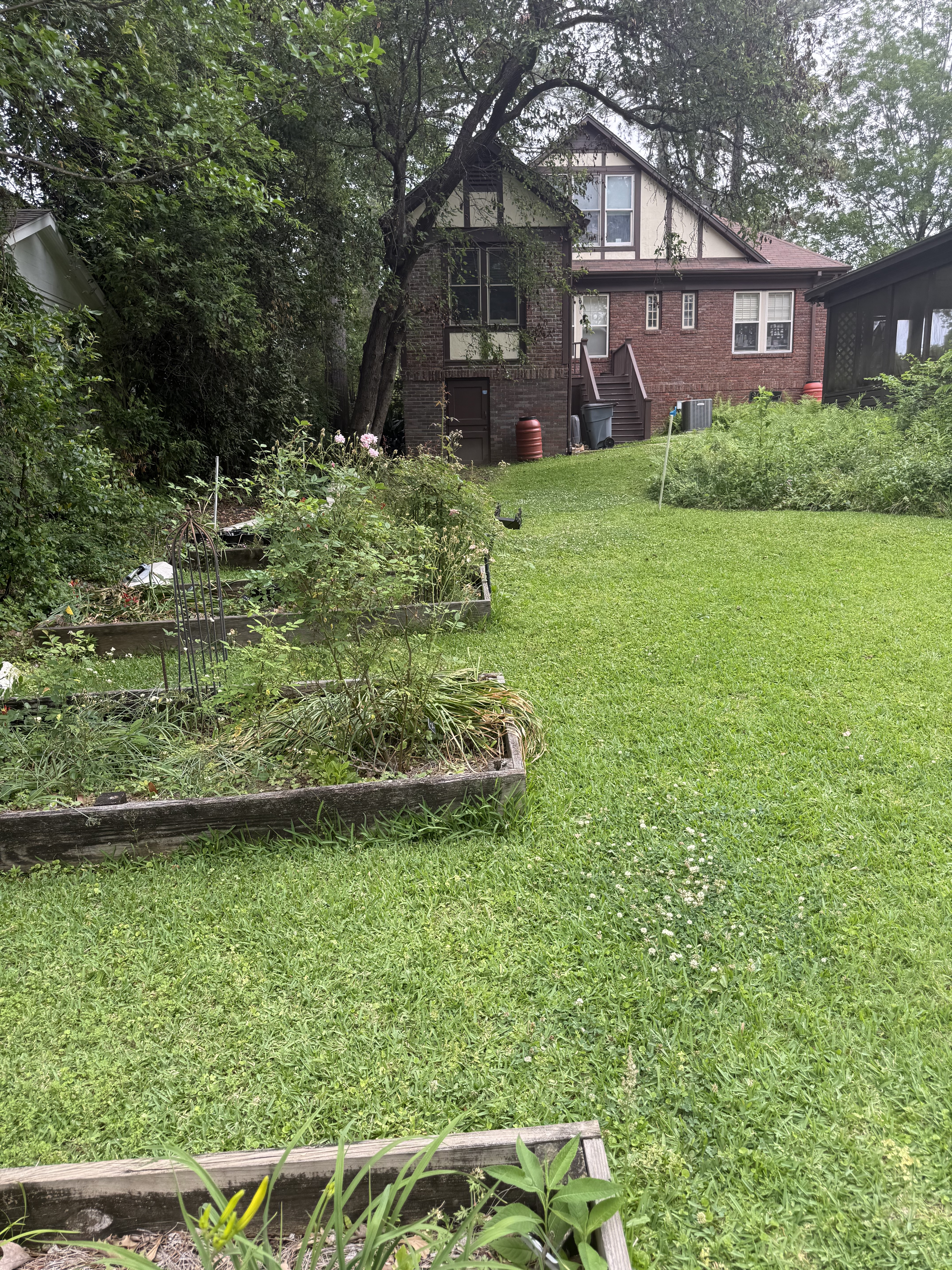
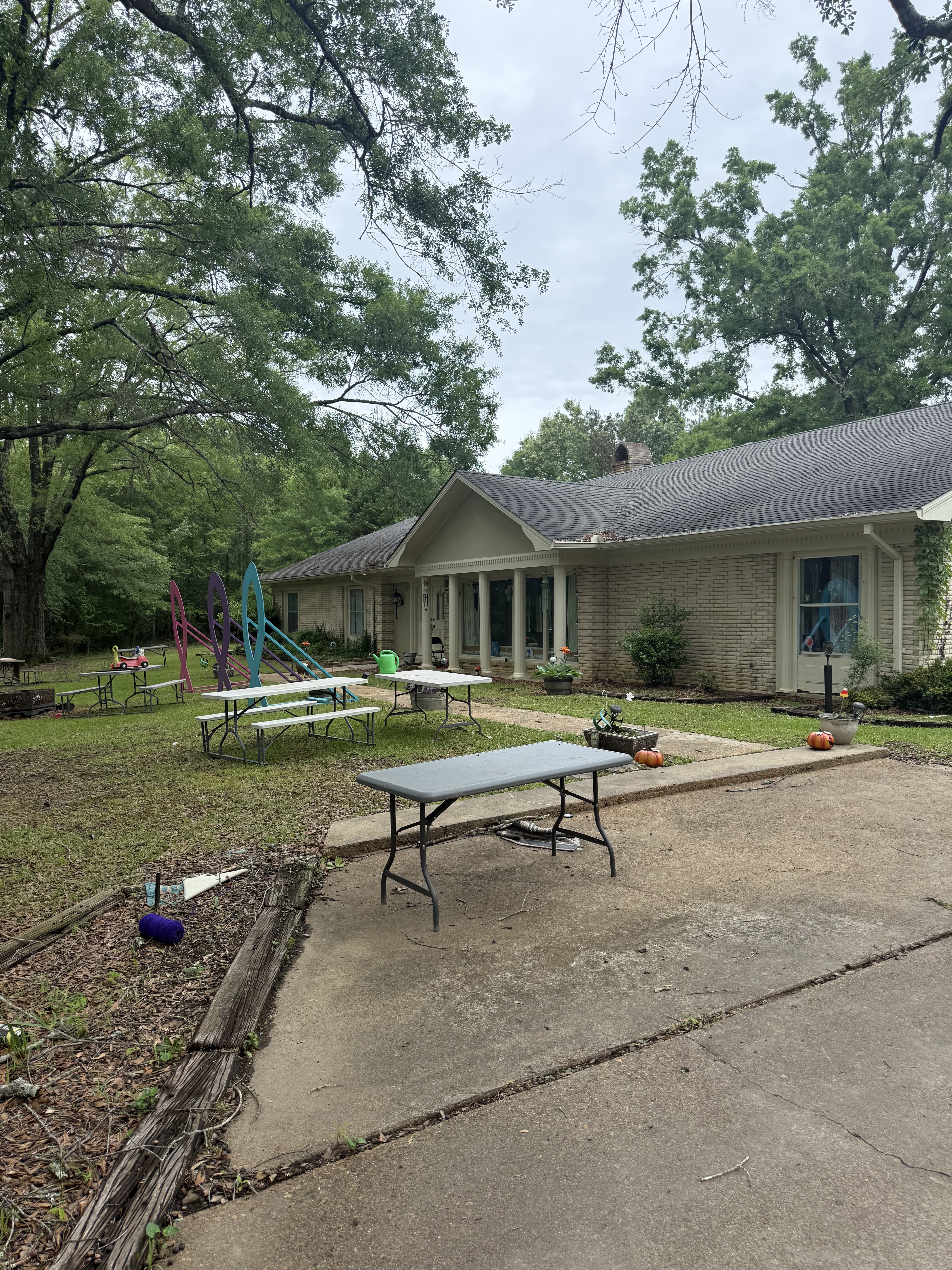
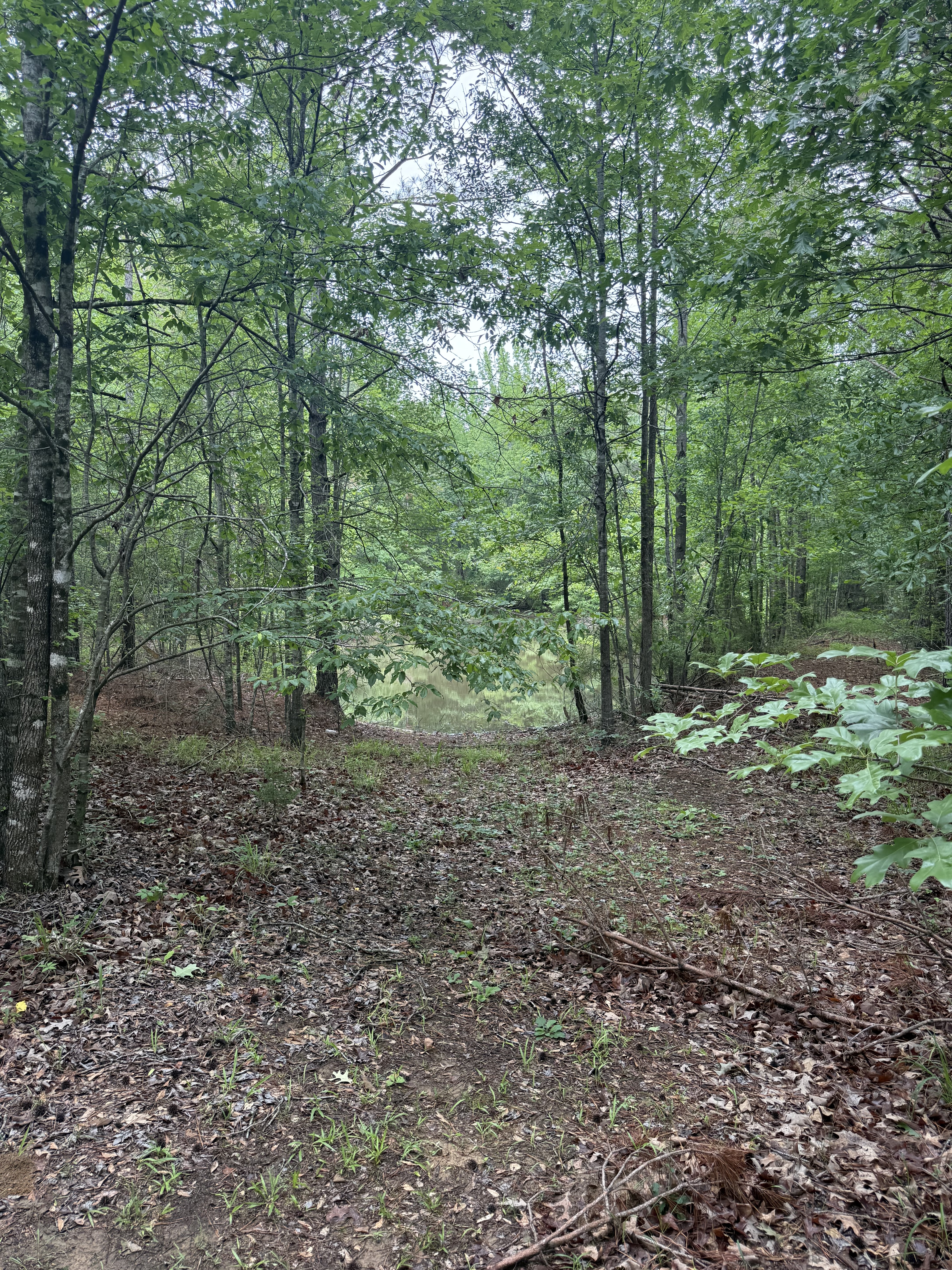
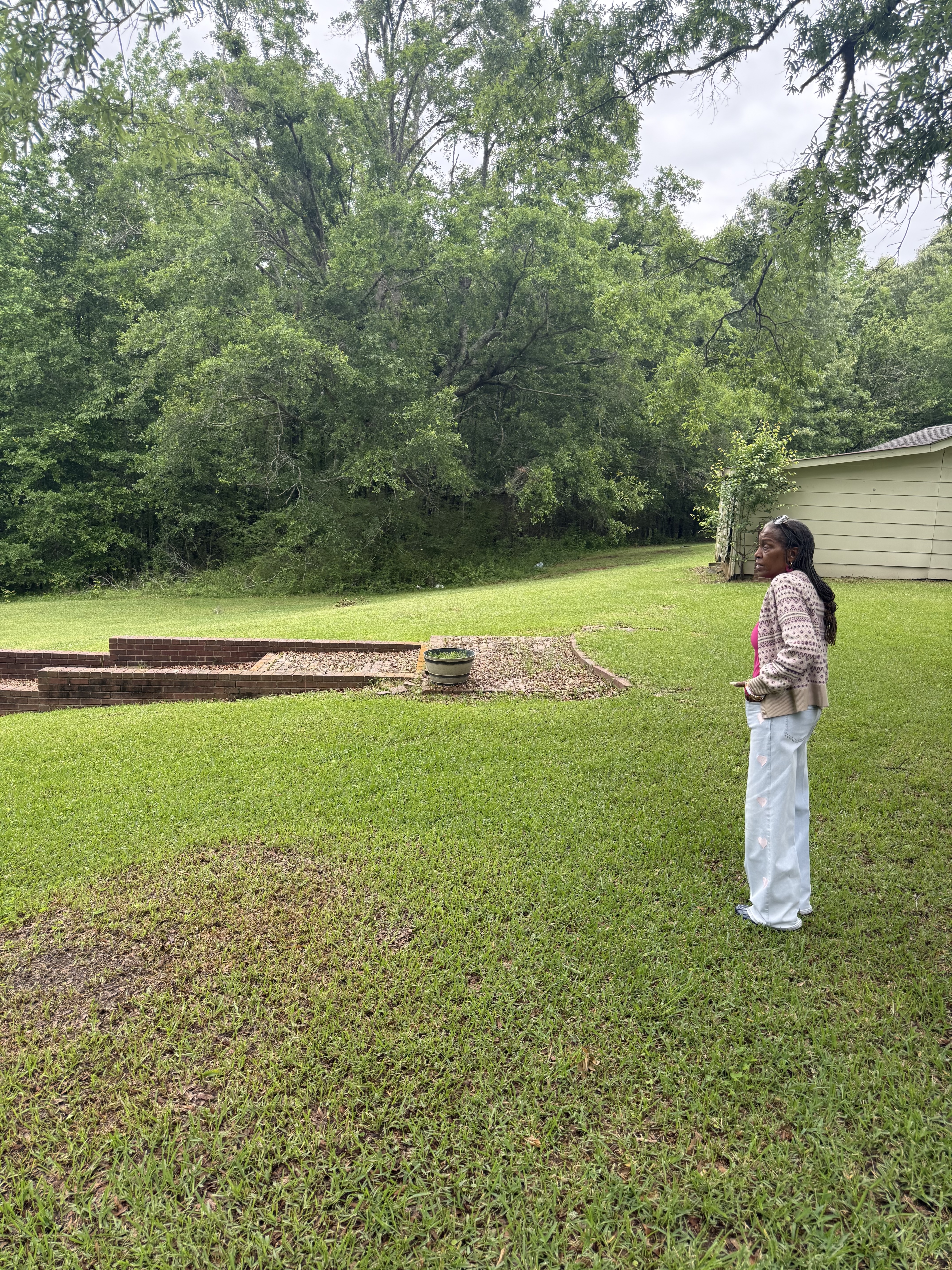
On April 30, I dropped Ruth off at the train station and returned to Durant to commemorate the International Day to End Corporal Punishment. Comrade Ellen gave me a tour of the grounds, which includes two single-family homes, a pond, and abundant plots for gardening. We conversed about mutual aid and solidarity networks, necessities in this era of increasing political austerity and repression.
We spent forty minutes on Facebook Live, broadcasting from the page of Nollie Jenkins Family Center, and Royalty brought tears to our eyes with a heartfelt anecdote. Comrades cast a wide net about how violence against children – perpetrated by police officers, departments of child protective services, and adults who generally deny their agency – hinders all of us from achieving true liberation. We embraced at the end of the session and leaned into a physical manifestation of the optimism that informs our world-building. We hugged as I departed and affirmed our intent to gather together again in Mississippi this summer.
I ended this spiritually refreshing journey with Aunt Joy, sharing a meal at the buffet where I discussed trust with two brilliant children two and a half years prior. The Black radical tradition persists, meeting the current epoch with the wisdom from the past and the better vision of the future.
I hope you’re hanging in there in these trying times. It’s been quite the season for me. I lost my second campaign for Justice of the Peace in Travis County, Texas six weeks ago, took a month off of work, rested, hit the road, and dreamed expansively of how to continually build upon my organizing as a Black socialist in the American South at this critical juncture of human history. As you can imagine, I have many thoughts; I’m excited to distill them through this forum.
On an administrative note, my Substack now serves as an archive. Feel free to check out my writing from 2023 to 2026 there. I imported my subscriber list to a WordPress-operated Jetpack newsletter, and you’ll now get updates from me here. I hope you’ll stay for the new phase of the journey, but I understand if you want to opt out. Send me a direct note if you want me to remove you from the list. If you do stay, please do consider becoming a paid supporter if you can swing it – the journey to the demise of capitalism is a long one.
I present the first piece of an updated newsletter: A Century Later
*****
Grandma Jackson entered the world on April 15, 1926 in Rodney, Mississippi. Like millions of Black people a century ago, she immediately faced exploitation as a sharecropper.
The same year, Fidel Castro was born in Cuba. Within that twelve-month stretch, Eugene Debs died, and the Austin Public Library commenced its operations.
A century is a significant milestone for a socialist. Literally one hundred years have elapsed since these monumental occurrences of 1926. It is humbling to connect with the rich intellectual tradition of comrades – through their writing and their personal impact on me – who lived ten decades ago. It is encouraging to see what mass movements won from 1926 to 2026 in a hostile organizing terrain. It is jarring that the conditions of the world in 2026, even with technological advancements, largely mirror what was happening in the mid-1920s.
A class of billionaires replaced oil barons. In 1926, the globe shifted from one world war to the next; in 2026, the United States needlessly devotes hundreds of billions of dollars toward imposing its corrupt, imperial will in Venezuela, Cuba, and Iran. A century ago, private philanthropy directed ill-gotten wealth toward building libraries; today, a wave of privatization threatens public goods through voucher programs & deregulated profiteering. What can be drawn from this seemingly endless history of imperialism, racism, and unrelenting greed?
I finished Socialism and Man in Cuba by Che Guevara and Fidel Castro yesterday, and I thank a dear comrade from Charlottesville for sending it to me at the end of 2025. Fidel’s contribution to this important text is basically a eulogy to Che, delivered in 1987 at the occasion of the twentieth anniversary of the American government murdering Che in Bolivia. Fidel expresses that “we must conclude that in the life of our revolution, Che never died, and that in reality he’s more alive than ever, is more influential than ever, and is a more powerful opponent of imperialism than ever.” He later remembers Che as “a man who never asked others to do something that he himself would not do first; a model of a righteous, honest, pure, courageous man, full of human solidarity.”
What a poignant legacy, clear vision, and rallying cry for socialists who are organizing today. We must consistently draw inspiration from our departed comrades, recognizing that our efforts will one day motivate comrades who have yet to arrive. On April 27, 1901, Eugene Debs spoke about the climax of capitalism, As he stared down his eventual prison sentences, he pushed us to realize that a glorious day would dawn when “the capitalists work for what they get, and the workers get what they work for.” He then reminded comrades that “every capitalist is your enemy, and every workingman is your friend.” In 2026, as isolation and despair run rampant, we must keep this wisdom in mind as we continue the work of our comrades from a century ago. We require a broad multinational, multiracial, and multigender coalition to achieve human dignity. We will get there with the foundation of socialist thought, which transcends time, as a bedrock. No one is disposable.
On what would’ve been Grandma Jackson’s one hundredth birthday, I reflect deeply on what she taught me and the gift she always will be to me. As a public school educator who worked in Madison Parish, Louisiana for thirty years, she taught me to think critically. She nurtured my love of reading as a child, and – in her own way – she pushed me to contend with the organized abandonment that generations of Black communities in the American South have faced. With her steadfast example in mind, I feel renewed each day to complete my mission and win a world where Black people own the means of production as they democratically determine how their public institutions operate. I am honored to remember Grandma Jackson as both a cherished forebear and a comrade.
We honor those who lived in 1926 – particularly Grandma Jackson – and look ahead to the better world that will await our comrades in 2126.
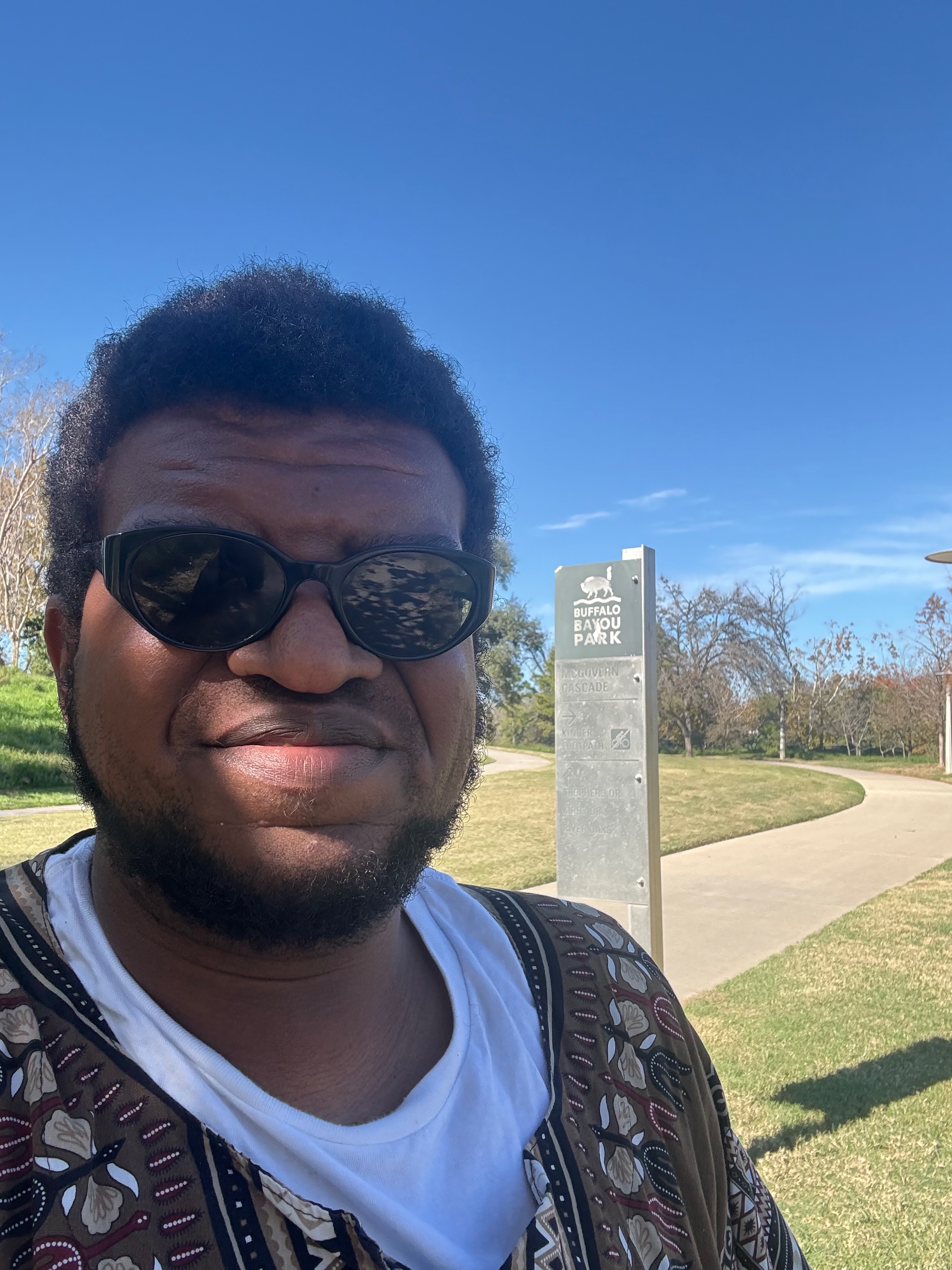
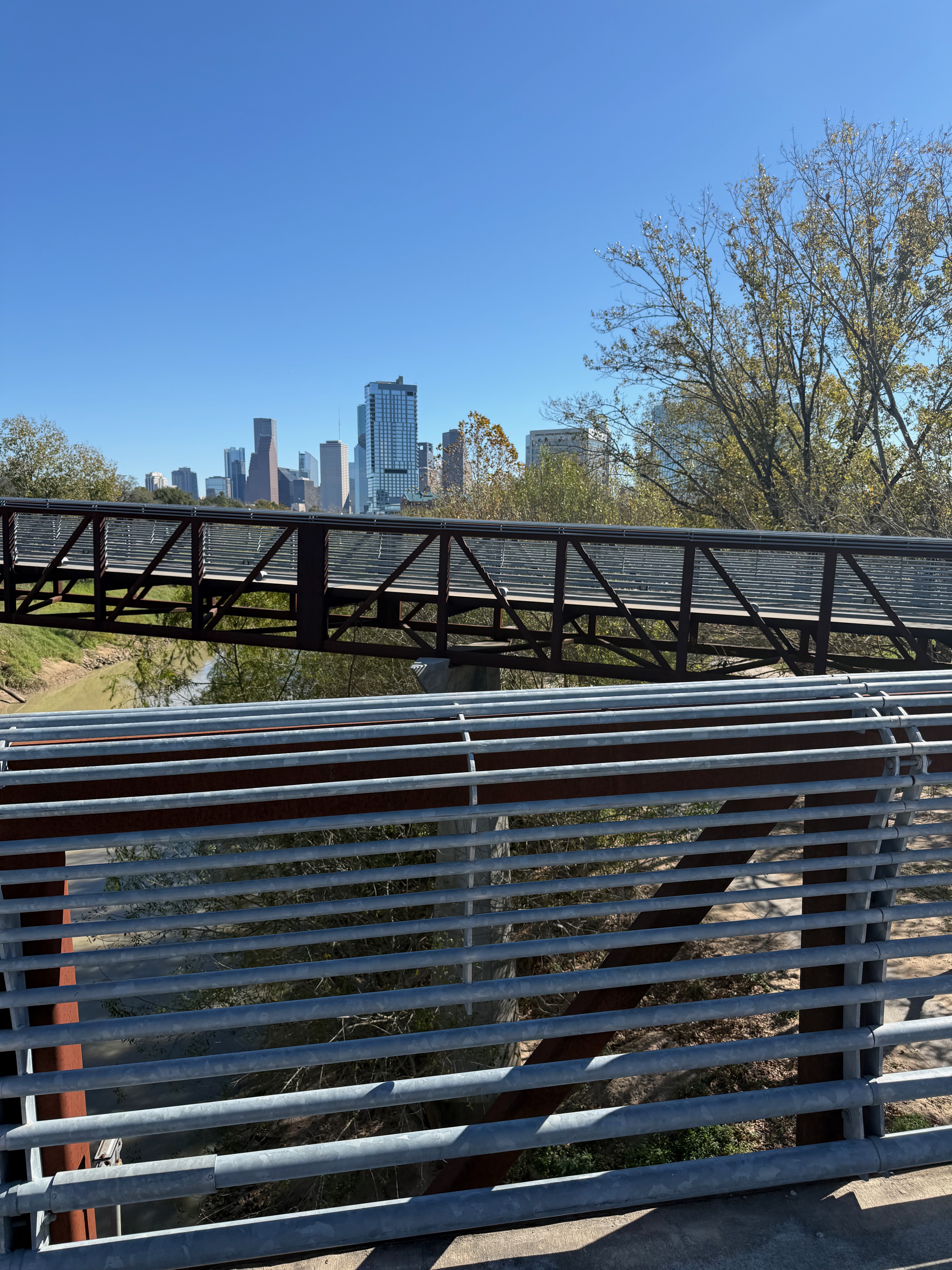
Toward the end of a recent work trip in Houston, I found myself with more free time than I imagined. Rather than rush back to Austin, I parked my rental right off of Allen Parkway and walked along the paths of Buffalo Bayou Park.
Earlier that morning, I grew restless as I refreshed the New York Times app on my phone. I witnessed broken windows, the deployment of tear gas, and brutal assaults – all done by masked police officers in Minneapolis, seemingly with impunity.
I meandered along a familiar small road, having spent time in the same park in the early days of the coronavirus pandemic. In some ways, my grief had abated; in others, it felt more pronounced than ever before.
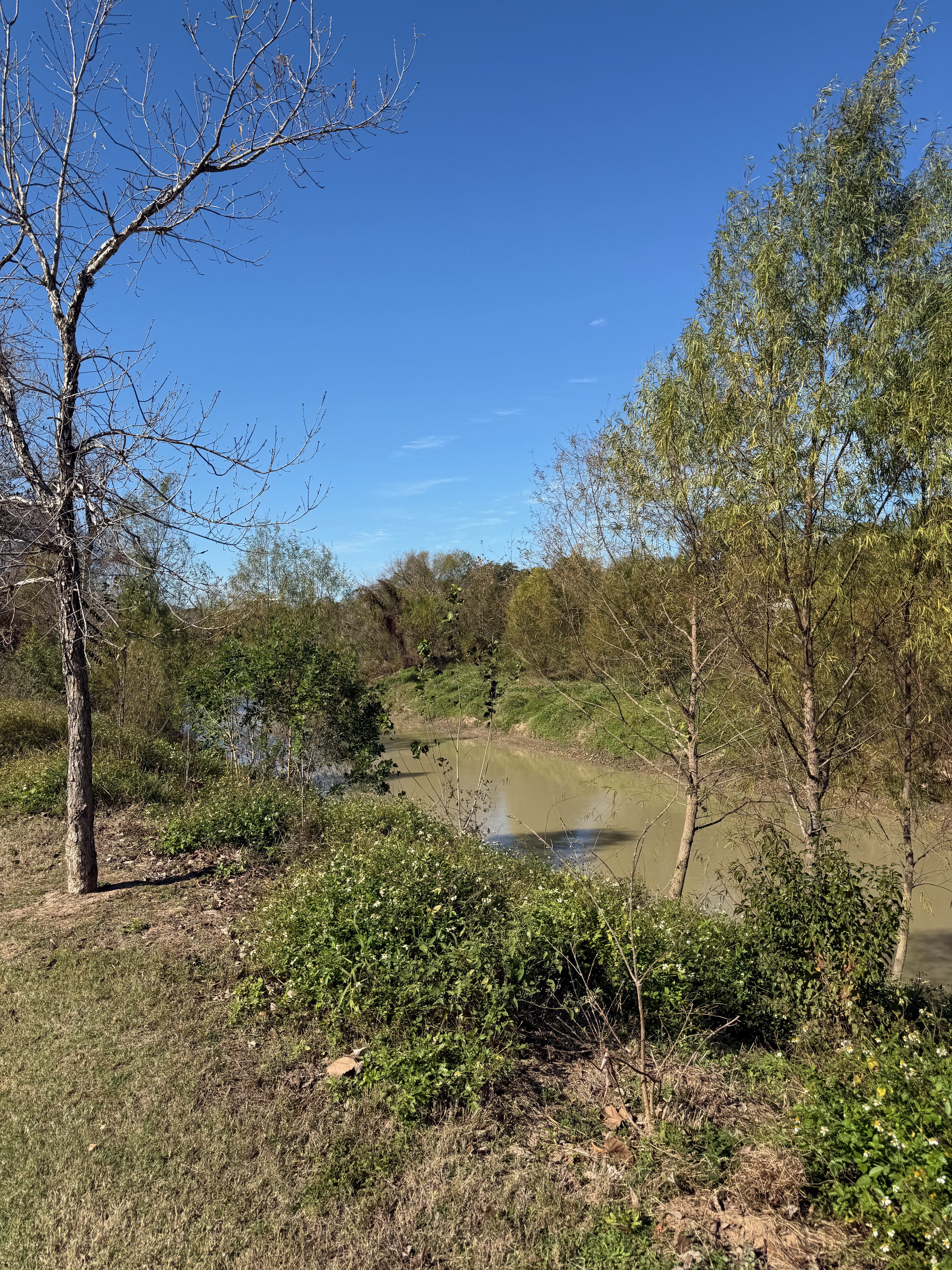
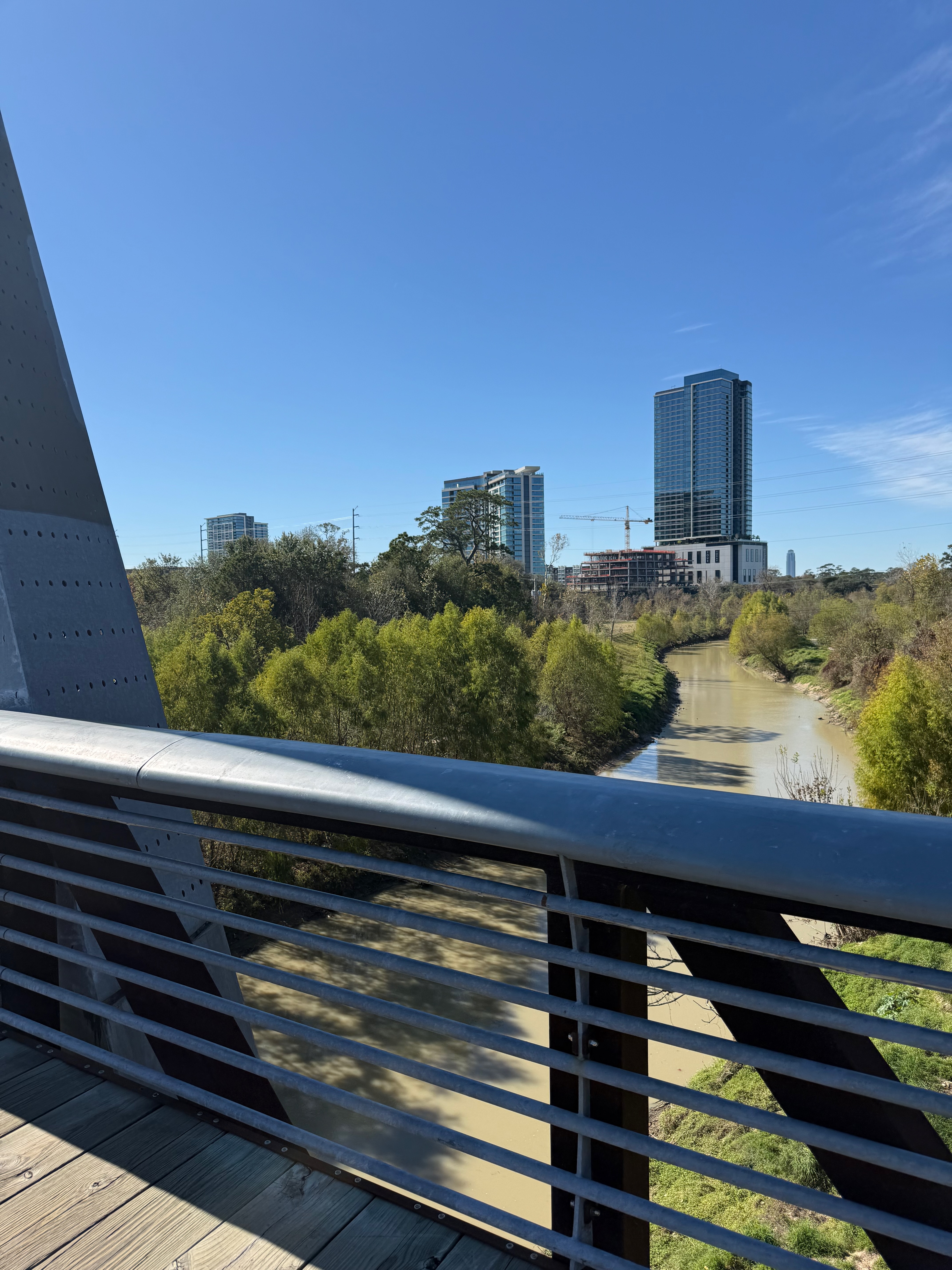
I noticed the murky brown water flowing through the entire space. I knew it held memory in its own way. In its own fashion, it recalled the version of me from March 14, 2020; I appreciated this reality and gave into the continuity of time. What does one do when the world is too painful but go to a park? Six years later, a PJ Morton song plays in my head, and I acknowledge my pandemic-era evolution to truly flow like water through my life.
Houstonians passed me along the trail. The young, the old, the childless, the parent, the focused, and the dreamer converged on this public good during a quiet mid-January day. My soul sparked with each small nod, eavesdropped phone conversation, and subtle smile. We existed in this park together, connected in grand and unknowable ways.
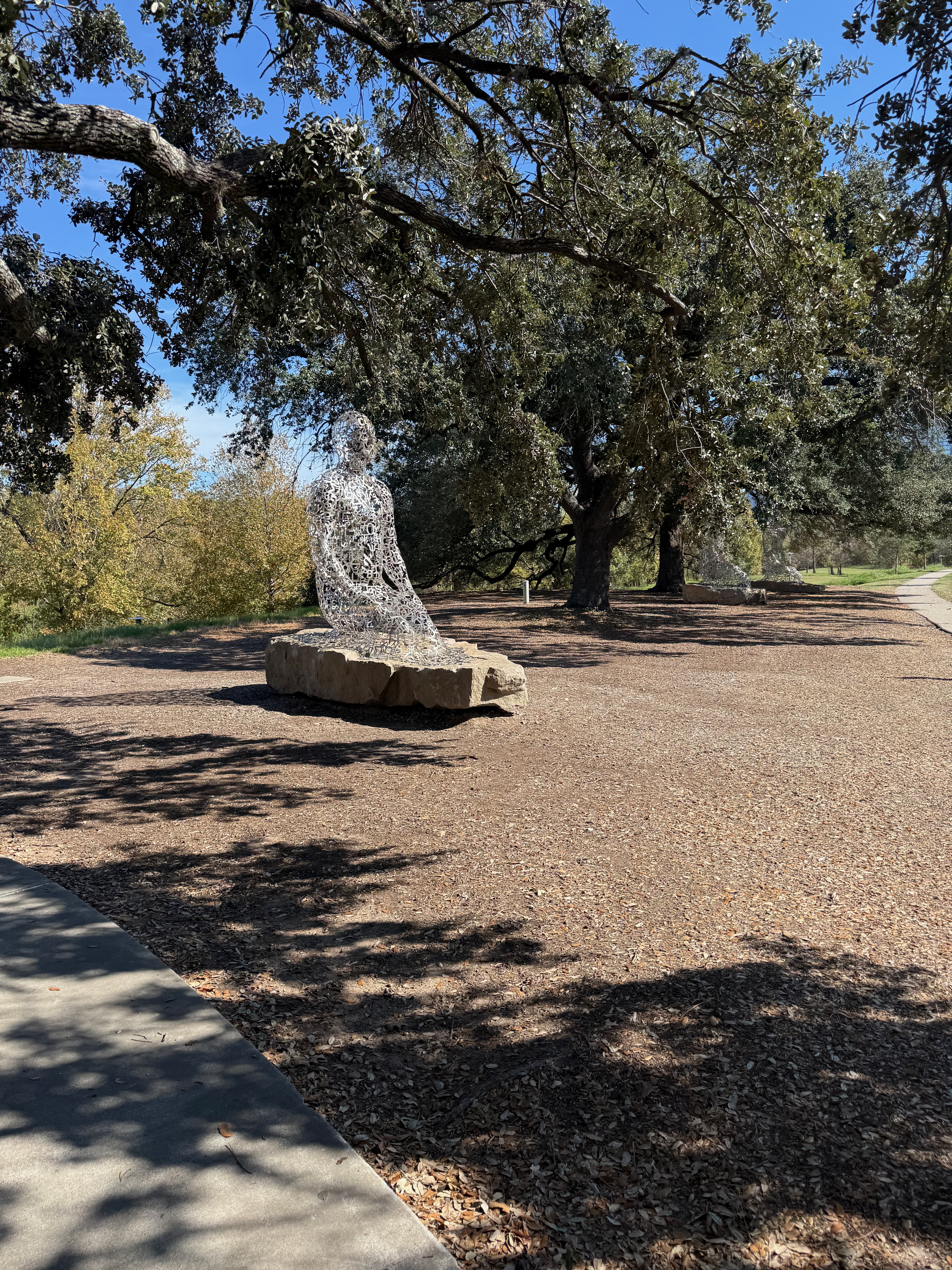
I found a series of sculptures after thirty minutes on my sojourn. What was this meditative, inanimate person trying to tell me? I discovered them in a sequence – alone, but never far from another one. The artist who constructed them undoubtedly and intentionally placed each one. This powerful metaphor pushed me to a suspended spot, high above the ground below.
I reflected on the power of a bridge. Its deliberate measurements – fine-tuned at some of the smallest fractions in mathematics – make it easier to reach a desired point. Where could these structures take us if we fully invested in them and leaned into the manner in which they nurture our connectivity? What possibilities could await us if we moved away from walls, fences, and other barriers?
Toward the end of my walk, I behold construction in the distance. It served as a stark reminder of my existence in the heart of the empire, where greed and repression are unavoidable. As the country commemorates its 250th year in July, it continues to extract capital, exploit labor, and export violence across the globe. In 2026, the end goal of this nation’s leaders is to privatize everything — and make working people pay for all that they use. These oligarchs seek to eliminate the diversity that I consistently encountered across a 90-minute stretch and take away the ability for us to gather to celebrate the strength of our diversity.
I complete my time in Houston in contemplation of the miracle of a quiet day in a public park. Despite our collective and individual heartache, scores of people converged with me upon this incalculably important land. We understand intrinsically the need for public goods – a park, a library, a school – that are collectively owned and democratically governed.
In the heart of one of the largest cities in the United States – in a park – I achieved peace and restoration. Accordingly, I fight for a true public infrastructure with renewed zeal and clarity.
Socialism found me gradually throughout my twenties. Sure, I engaged in fights against the death penalty as a teenager in college at Howard, and I more swiftly came to the conclusion that police and prisons needed to go. Still, the affirmative vision of what I sought mentally evaded me for years.
I finished law school in Louisiana in 2016 and returned to D.C. right on time for the first Trump Administration. I eventually found myself as a young lawyer at Advancement Project, a multi-racial civil rights organization. I worked on a few issues while I was there; most notably for tonight, I want to focus on my efforts to build and sustain quality public schools for all.
My colleagues and I studied and sharpened our politics on this front. We read Eve L. Ewing and reflected on what accessible intergenerational schools might look like in the United States. I couldn’t stop thinking about her reflections of Indigenous schools in the Pacific Northwest she visited, where community elders work in classrooms just to foster connections between generations. I pulled from my personal history, namely my assistant-principal-mother and my junior-high-math-teacher grandmother to consistently remind myself just how much an education means to a person, a community, & a society. Though I greatly enjoyed this intellectual and meaningful exchange, I left D.C. in 2019, while this work was still in its early planning stages. I remembered it quite fondly.
***
Two weeks ago, I returned to DC with a colleague from Texas Appleseed to attend a convening focused on ending school closures organized by Advancement Project. It represented such a full circle moment in good and bad ways. These days, I am nearing a decade as a civil rights lawyer – with all the experiences that characterize such a declaration. In fact, being in this space takes me back to November 2023, when I co-hosted a Texas-specific convening of the National Campaign for Police Free Schools here. I’ve been an open socialist since 2021; I ran for office under a socialist banner in 2022, and I built my expertise in school safety and school climate policies to meet the moment.
On the other hand, during my time in D.C. two weeks ago, the second Trump Administration was days away from taking power, and it felt like my efforts to halt the closures of public schools had been paused for six years. I was eager to dive back into the work, especially since my socialist politics increasingly revolve around achieving quality public schools for all.
We heard from several comrades across the convening who have engaged in fights to keep the doors of public schools open. A pair of organizers and a lawyer from Oakland spoke about their efforts to prevent the closures of schools that primarily served Black children in the Bay Area. Using provisions of California state law, and some previous organizing relationships with the California Attorney General, they submitted a complaint to the Attorney General’s Office in 2022 and got a favorable ruling. Because the Oakland Unified School District had not completed an appropriate & required equity review, the state government prevented the school district from moving forward with the school closures. As a lawyer who seeks to work in deep partnership with community organizers, this victory felt incredibly resonant.
During this convening, we also heard from organizers with the Denver-based non-profit Movimiento Poder, as well as a national organizer from the Alliance for Educational Justice. In late 2024, Dr. Marrero, the superintendent of Denver Public Schools, attempted to rush through a slate of school closures that would’ve disproportionately impacted Latine children.
When these organizers received word of this grave injustice, they swiftly & efficiently moved to action. Across a month, they reached out to various parents and young people in the community, tracked Dr. Marrero’s presentations at undemocratic forums that entertained no voices from the public, and held actions outside of the headquarters of Denver Public Schools. They put their heart and soul into actualizing their theory of change – that directly impacted working class people are intrinsically the leaders we seek across time. They saw people transform their heartache into action, with a number of people pushing through their initial nervousness to speak to the media. They took Dr. Marrero’s justification for the school closures, like under-utilization and declining enrollment, and eloquently conveyed that a school is not a business – it is a community institution, with benefits for the public across generations.
The organizing in Colorado did not yield the same result as the success in California. The district voted to move forward with Dr. Marrero’s plan. Despite that fact, to witness the passion & brilliance in the voices of these organizers just a couple weeks ago was to understand that hope is a discipline. Last week, a lawsuit was filed to enjoin – or prevent – the district from moving forward with them in the next academic year. Even in the face of specific defeats, we march onward toward a public infrastructure for all.
Hearing these stories earlier this month informed my approach to today’s story. I considered the prompt – where have I experienced the beloved community? What place holds the best hope for it? Schools consistently emerged in my mind as the answer.
Schools, their own sites of intergenerational joy for so many families, represent an incredibly powerful avenue for the multiracial working class movement we require to defeat fascism. As a socialist, I recognize that public schools are homes of democratic engagement, relationship building, and exposure to the diversity that comprises our beautiful world. The present fight for quality public schools across the country pushes back on the cynicism that seeks to grow in times of despair; people are engaging in powerful organizing to protect & strengthen this fundamental human right for future generations. I can hardly think of better examples of socialism in action.
It is worth noting that the districts in both major cities I mentioned took significant steps to turn away from school policing after the murder of George Floyd in 2020. In the years since, both districts have stalled and walked back their commitments to remove predatory police from the halls that our students walk. The ruling class is also aware of how powerful well-functioning public schools are on the road to socialism, which is why the attempts to privatize them are so relentless.
Be encouraged, dear beloved community. As you’re gathered here tonight, take my example of public schools and reflect on times in your life when you felt the radical possibility of connection – without the hindrances of capitalism, racism, and classism. It is possible to win socialism across the globe – and thereby consistently experience the beloved community of which Dr. Martin Luther King Jr. dreamed. Meditate on these thoughts as we continually journey & labor toward a better world.




 Andrew Reginald Hairston