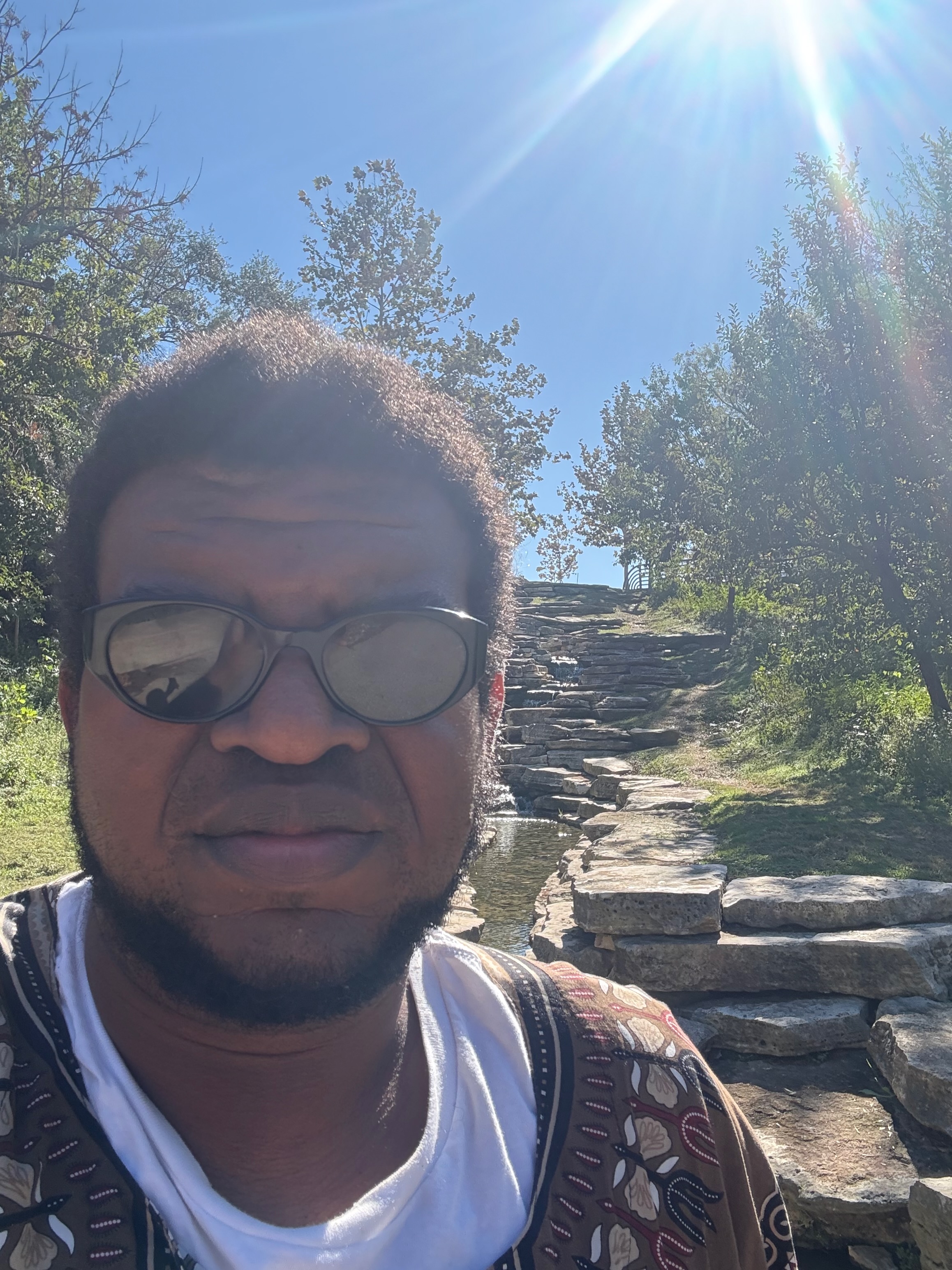
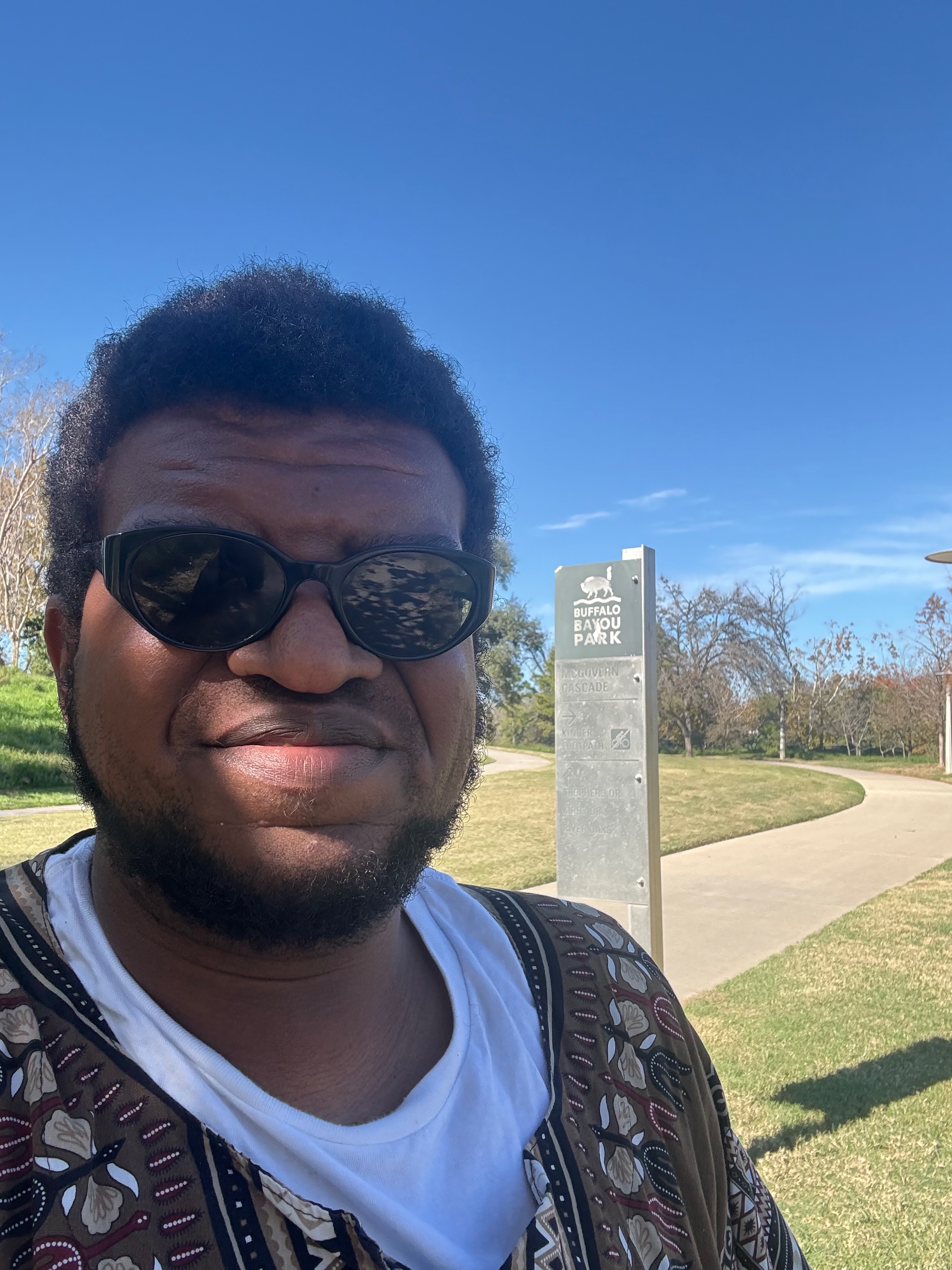
Buffalo Bayou Park

Toward the end of a recent work trip in Houston, I found myself with more free time than I imagined. Rather than rush back to Austin, I parked my rental right off of Allen Parkway and walked along the paths of Buffalo Bayou Park.

Earlier that morning, I grew restless as I refreshed the New York Times app on my phone. I witnessed broken windows, the deployment of tear gas, and brutal assaults – all done by masked police officers in Minneapolis, seemingly with impunity.

I meandered along a familiar small road, having spent time in the same park in the early days of the coronavirus pandemic. In some ways, my grief had abated; in others, it felt more pronounced than ever before.

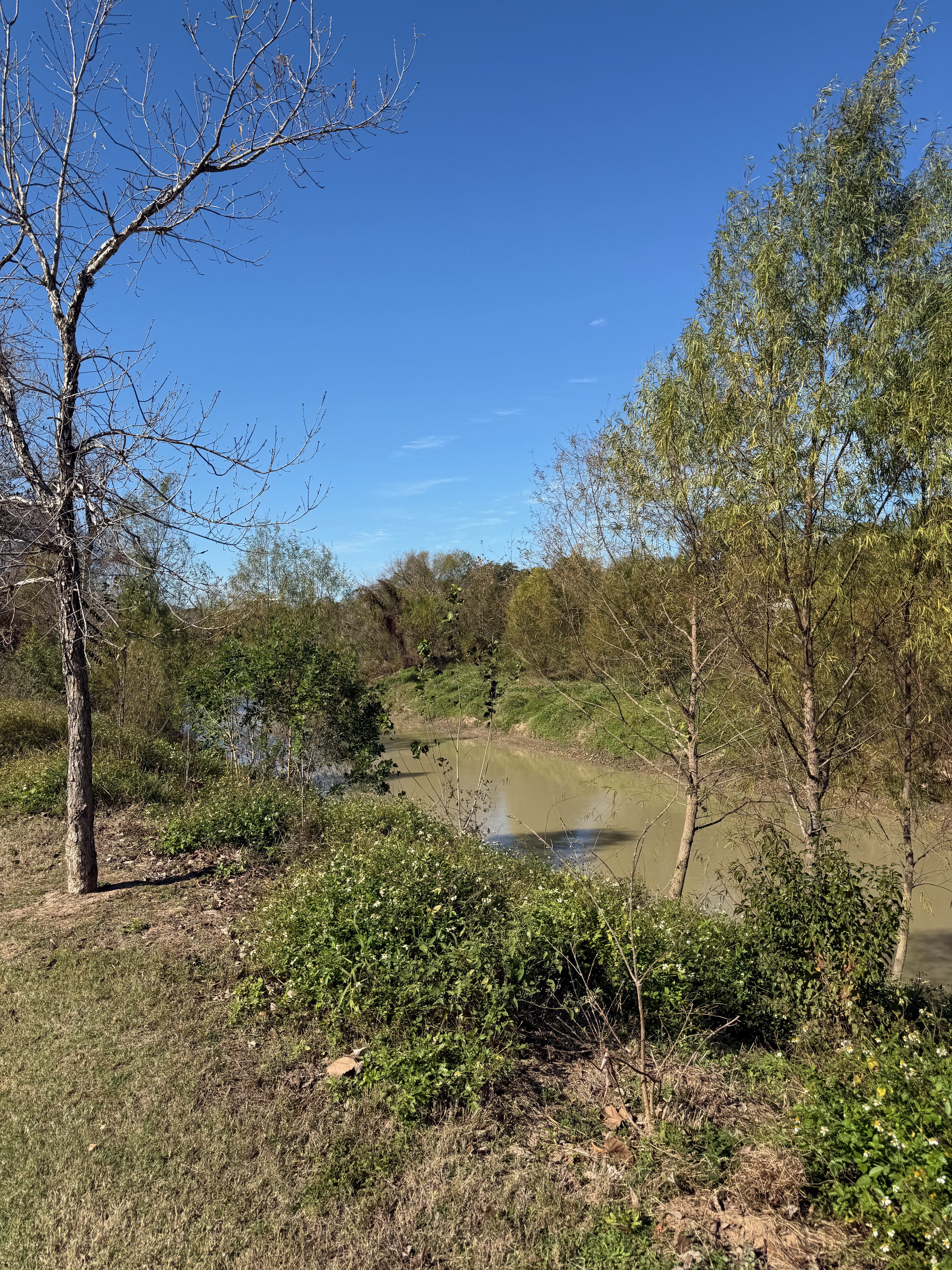
I noticed the murky brown water flowing through the entire space. I knew it held memory in its own way. In its own fashion, it recalled the version of me from March 14, 2020; I appreciated this reality and gave into the continuity of time. What does one do when the world is too painful but go to a park? Six years later, a PJ Morton song plays in my head, and I acknowledge my pandemic-era evolution to truly flow like water through my life.

Houstonians passed me along the trail. The young, the old, the childless, the parent, the focused, and the dreamer converged on this public good during a quiet mid-January day. My soul sparked with each small nod, eavesdropped phone conversation, and subtle smile. We existed in this park together, connected in grand and unknowable ways.

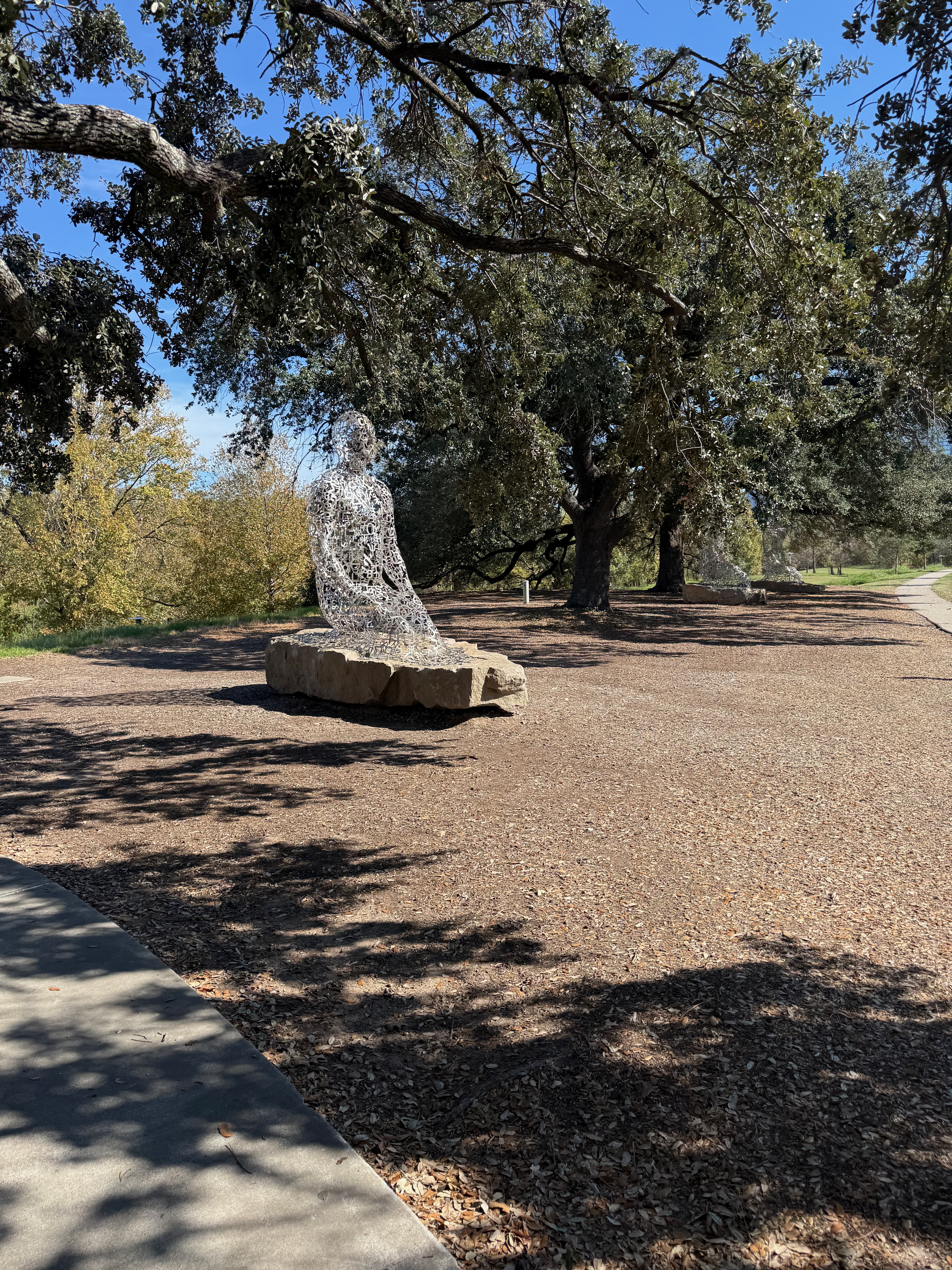
I found a series of sculptures after thirty minutes on my sojourn. What was this meditative, inanimate person trying to tell me? I discovered them in a sequence – alone, but never far from another one. The artist who constructed them undoubtedly and intentionally placed each one. This powerful metaphor pushed me to a suspended spot, high above the ground below.

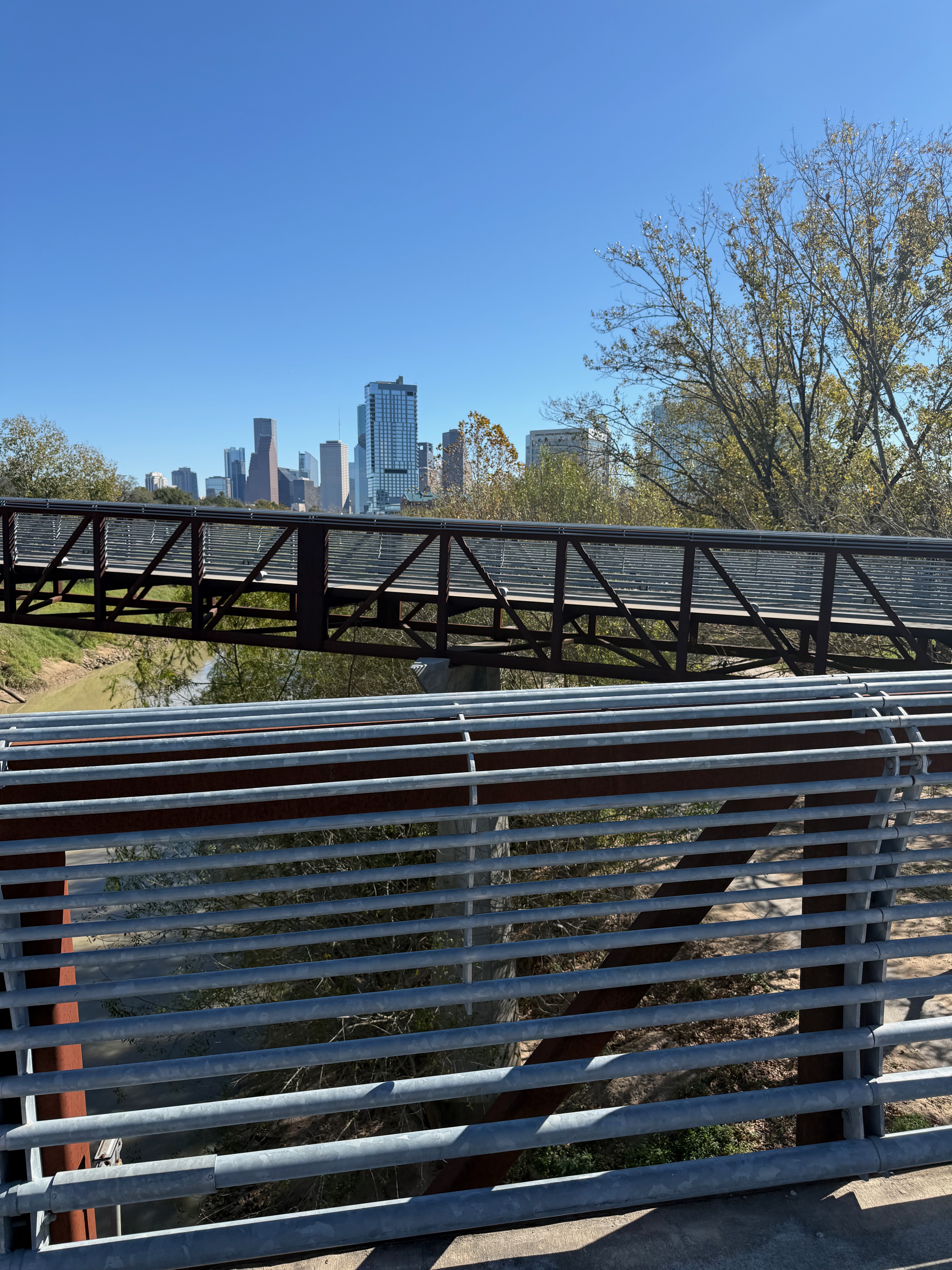
I reflected on the power of a bridge. Its deliberate measurements – fine-tuned at some of the smallest fractions in mathematics – make it easier to reach a desired point. Where could these structures take us if we fully invested in them and leaned into the manner in which they nurture our connectivity? What possibilities could await us if we moved away from walls, fences, and other barriers?

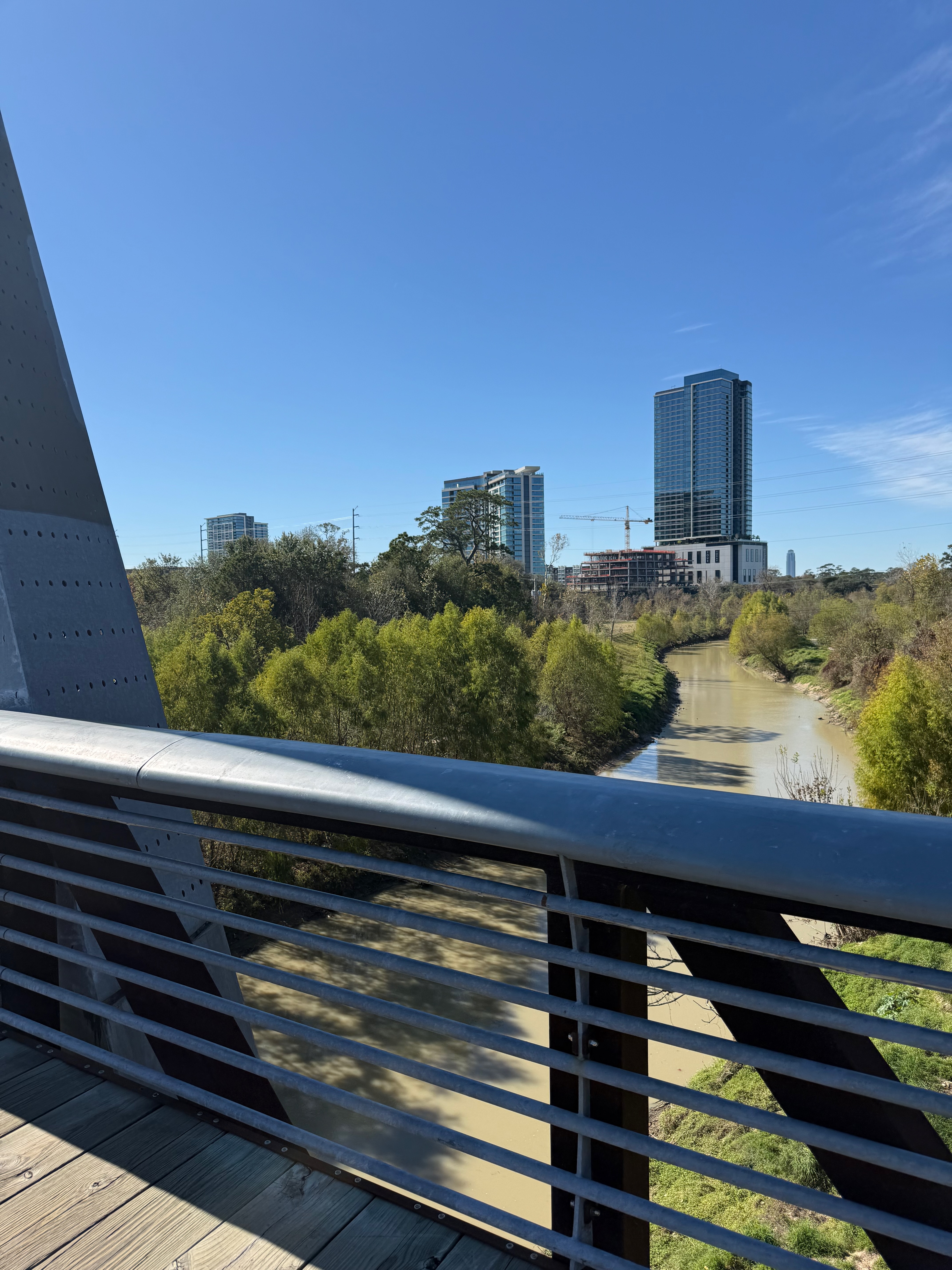
Toward the end of my walk, I behold construction in the distance. It served as a stark reminder of my existence in the heart of the empire, where greed and repression are unavoidable. As the country commemorates its 250th year in July, it continues to extract capital, exploit labor, and export violence across the globe. In 2026, the end goal of this nation’s leaders is to privatize everything — and make working people pay for all that they use. These oligarchs seek to eliminate the diversity that I consistently encountered across a 90-minute stretch and take away the ability for us to gather to celebrate the strength of our diversity.

I complete my time in Houston in contemplation of the miracle of a quiet day in a public park. Despite our collective and individual heartache, scores of people converged with me upon this incalculably important land. We understand intrinsically the need for public goods – a park, a library, a school – that are collectively owned and democratically governed.

In the heart of one of the largest cities in the United States – in a park – I achieved peace and restoration. Accordingly, I fight for a true public infrastructure with renewed zeal and clarity.

Posted in Uncategorized | Leave a comment

The Road to Socialism Through Schools

I shared this essay during Harmony & Healing: National Day of Racial Healing Community Circle on January 28, 2025 in Austin, Texas.

Socialism found me gradually throughout my twenties. Sure, I engaged in fights against the death penalty as a teenager in college at Howard, and I more swiftly came to the conclusion that police and prisons needed to go. Still, the affirmative vision of what I sought mentally evaded me for years. 

I finished law school in Louisiana in 2016 and returned to D.C. right on time for the first Trump Administration. I eventually found myself as a young lawyer at Advancement Project, a multi-racial civil rights organization. I worked on a few issues while I was there; most notably for tonight, I want to focus on my efforts to build and sustain quality public schools for all. 

My colleagues and I studied and sharpened our politics on this front. We read Eve L. Ewing and reflected on what accessible intergenerational schools might look like in the United States. I couldn’t stop thinking about her reflections of Indigenous schools in the Pacific Northwest she visited, where community elders work in classrooms just to foster connections between generations. I pulled from my personal history, namely my assistant-principal-mother and my junior-high-math-teacher grandmother to consistently remind myself just how much an education means to a person, a community, & a society. Though I greatly enjoyed this intellectual and meaningful exchange, I left D.C. in 2019, while this work was still in its early planning stages. I remembered it quite fondly. 

***

Two weeks ago, I returned to DC with a colleague from Texas Appleseed to attend a convening focused on ending school closures organized by Advancement Project. It represented such a full circle moment in good and bad ways. These days, I am nearing a decade as a civil rights lawyer – with all the experiences that characterize such a declaration. In fact, being in this space takes me back to November 2023, when I co-hosted a Texas-specific convening of the National Campaign for Police Free Schools here. I’ve been an open socialist since 2021; I ran for office under a socialist banner in 2022, and I built my expertise in school safety and school climate policies to meet the moment.

On the other hand, during my time in D.C. two weeks ago, the second Trump Administration was days away from taking power, and it felt like my efforts to halt the closures of public schools had been paused for six years. I was eager to dive back into the work, especially since my socialist politics increasingly revolve around achieving quality public schools for all. 

We heard from several comrades across the convening who have engaged in fights to keep the doors of public schools open. A pair of organizers and a lawyer from Oakland spoke about their efforts to prevent the closures of schools that primarily served Black children in the Bay Area. Using provisions of California state law, and some previous organizing relationships with the California Attorney General, they submitted a complaint to the Attorney General’s Office in 2022 and got a favorable ruling. Because the Oakland Unified School District had not completed an appropriate & required equity review, the state government prevented the school district from moving forward with the school closures. As a lawyer who seeks to work in deep partnership with community organizers, this victory felt incredibly resonant. 

During this convening, we also heard from organizers with the Denver-based non-profit Movimiento Poder, as well as a national organizer from the Alliance for Educational Justice. In late 2024, Dr. Marrero, the superintendent of Denver Public Schools, attempted to rush through a slate of school closures that would’ve disproportionately impacted Latine children.

When these organizers received word of this grave injustice, they swiftly & efficiently moved to action. Across a month, they reached out to various parents and young people in the community, tracked Dr. Marrero’s presentations at undemocratic forums that entertained no voices from the public, and held actions outside of the headquarters of Denver Public Schools. They put their heart and soul into actualizing their theory of change – that directly impacted working class people are intrinsically the leaders we seek across time. They saw people transform their heartache into action, with a number of people pushing through their initial nervousness to speak to the media. They took Dr. Marrero’s justification for the school closures, like under-utilization and declining enrollment, and eloquently conveyed that a school is not a business – it is a community institution, with benefits for the public across generations. 

The organizing in Colorado did not yield the same result as the success in California. The district voted to move forward with Dr. Marrero’s plan. Despite that fact, to witness the passion & brilliance in the voices of these organizers just a couple weeks ago was to understand that hope is a discipline. Last week, a lawsuit was filed to enjoin – or prevent – the district from moving forward with them in the next academic year. Even in the face of specific defeats, we march onward toward a public infrastructure for all. 

Hearing these stories earlier this month informed my approach to today’s story. I considered the prompt – where have I experienced the beloved community? What place holds the best hope for it? Schools consistently emerged in my mind as the answer. 

Schools, their own sites of intergenerational joy for so many families, represent an incredibly powerful avenue for the multiracial working class movement we require to defeat fascism. As a socialist, I recognize that public schools are homes of democratic engagement, relationship building, and exposure to the diversity that comprises our beautiful world. The present fight for quality public schools across the country pushes back on the cynicism that seeks to grow in times of despair; people are engaging in powerful organizing to protect & strengthen this fundamental human right for future generations. I can hardly think of better examples of socialism in action. 

It is worth noting that the districts in both major cities I mentioned took significant steps to turn away from school policing after the murder of George Floyd in 2020. In the years since, both districts have stalled and walked back their commitments to remove predatory police from the halls that our students walk.  The ruling class is also aware of how powerful well-functioning public schools are on the road to socialism, which is why the attempts to privatize them are so relentless.

Be encouraged, dear beloved community. As you’re gathered here tonight, take my example of public schools and reflect on times in your life when you felt the radical possibility of connection – without the hindrances of capitalism, racism, and classism. It is possible to win socialism across the globe – and thereby consistently experience the beloved community of which Dr. Martin Luther King Jr. dreamed. Meditate on these thoughts as we continually journey & labor toward a better world.

Posted in Uncategorized | Tagged , , , , | Leave a comment

Grateful that Sweet Potato Pie is included among these wonderful pieces.

Posted in Uncategorized | Leave a comment

Posted in Uncategorized | Leave a comment

Navigating Mistakes in Song and Protest

I told this story for Voices of Change: Sharing Our Humanity Through Song and Storytelling in Austin, Texas on Saturday, October 26. 2024.

In 2013, I sang triumphantly before at least one hundred people in downtown D.C.

The brisk spring air whipped through the buildings – the White House was directly in my line of vision and an edifice that housed the D.C. local government towered over me to the left. 

The spirit of activism freely flowed; an intergenerational crowd of primarily Black people sang and chanted. I was close to completing my senior year at Howard University, and I was getting more & more settled into my organizing work.

We remembered Travyon Martin, Aiyana Stanley-Jones, Troy Davis and other Black people prematurely & violently taken away from us.

A time came for me to take the stage. I can’t quite remember if it was by an explicit invitation or a general open call. 

I walked to the front of the crowd, grabbed a microphone, and lifted my voice steadily. The National Negro Anthem was the song of choice. I knew it well, and it brought back memories of the churches across the South & the Midwest that had raised me. 

The first stanza flowed well:

Sing a song full of the faith that the dark past has taught us 

Sing a song, full of the hope that the present has brought us 

The crowd joined me, along with my college comrades who attended the event alongside me. The melody stood in strong opposition to racial capitalism, the prison industrial complex, and the many oppressive systems within the United States. 

I began the second stanza:

God of our weary years, God of our silent tears.

People swayed in the crowd, silently watching. I paused before continuing. I had swapped the beginning of the second stanza with the third. 

I stopped myself. I couldn’t believe that I’d made such a mistake. I scrambled to correct it and swiftly moved through the rest.

I resumed my place in the crowd, listening to other speakers reflect on bedrock principles like Black queer feminism, intersectional organizing, and relationship building in movement spaces. 

I tuned in and out. I honed in on my mistake and wouldn’t let it go. 

I meandered back to my dorm on campus, barely feeling the cool weather. I settled onto my bed and called my mother. 

Momma, I messed up Lift Ev’ry Voice and Sing at a protest.” 

She listened with deep empathy and reassured me that it wouldn’t be a mistake that would hinder my future activism. 

Still, I couldn’t shake my misstep – even as I drifted off into uneven, long rest. 

***

In the years since, I have participated in many more actions, advocacy days, convenings, and movement spaces. My mother was indeed right – I’m probably one of the few people who remembers my rendition of the National Negro Anthem on a spring day eleven years ago. 

(Well, save for you wonderful folks in Austin, Texas on October 26, 2024)

I now realize that such a mistake adds depth to the organizing and long-term visioning in which I engage. I’ve made other errors along the way; through it all, I’ve laughed, I’ve cried, and I’ve sung. After these indelible experiences, I arrived at a full understanding of my purpose on Earth: I fight unapologetically for Black children to convey their beautiful & complex humanity in whatever circumstance they find themselves. I returned from Houston yesterday, after a week of gathering with other Black Southerners to strategize about how we will achieve quality public schools for all. With that life’s mission in mind, I understand that I have to continually extend grace to myself and allow my own humanity to shine through. 

Of the utmost importance is the realization that I am never alone. I was not alone as a 21-year-old college student. I was not alone when Kate introduced me to Sarah, allowing this collaboration to blossom. I was not alone as Sarah, Sheniqua, and I gathered virtually over several weeks to plan this incredible event. I was not alone in writing this piece, as my work builds on itself like my community. 

None of us are alone as we navigate these uncertain times. Through our stumbles, which make us so deeply human, we recognize the vulnerability within one another and find deeper connection through it. No mistake can hinder us from leaning into the inherent collectivism that drives humanity. I invite you, as I did, to lean into the wisdom imparted by not saying the right thing, messing up the song verse, or not fully having your opinion formed on a political issue during a specific moment in time. As our melodious voices rise, so does a multiracial, intergenerational, and international movement for human dignity.

Posted in Uncategorized | Leave a comment

Remarks Prepared for the Pilot Program of the University of Houston Law Center’s American Constitution Society Student Chapter – November 13, 2023

Thank you, Justin, for that gracious introduction – and for inviting me to the University of Houston Law Center to deliver remarks this evening to the American Constitution Society – and the broader community.  I first must acknowledge that today is the fifth anniversary of the passing of my maternal grandmother, Mary Lee Dunbar Jackson. My family has inspired my work across the decades, and they continue to do so.

Last month, I celebrated my seventh anniversary as an attorney. As I imagine is the case for all of you, I marvel at the passage of time. A decade ago, I was preparing for my first set of exams at LSU. Unlike me, y’all will absolutely CALI your classes. As I commemorated this anniversary in Jackson, Mississippi – for a work trip – I drew particular gratitude from certain reinforcing elements of this journey. ACS fits that bill quite perfectly. 

When I was in law school, as the president of the Black Law Students Association at LSU, my chapter collaborated with ACS to discuss an incident of police brutality that occurred in Lafayette in 2015. This impactful event remained with me, for reasons that I couldn’t quite articulate at the time. As it turned out, addressing and remedying police abuses – especially those that occur in schools – would come to be a central & defining drive of my professional life. 

In 2019, about a year and a half into my tenure as a staff attorney at Advancement Project, I traveled to Charlottesville to present at the ACS Student Convention that year. On a panel, I discussed the ways in which movement lawyering informed my approach to the racial justice causes I supported in that role. 

A couple weeks after that conference, I went to Philadelphia to support an incredible youth base-building organization called the Philadelphia Student Union. They were fighting against a proposal that would’ve placed more metal detectors in schools across the district. Motivated by my time at the ACS Student Convention, I took the Amtrak from D.C. to Philadelphia to strategize with youth organizers before the board meeting. I ultimately drafted a letter that detailed the harms of metal detectors, both empirically and anecdotally, and stood prepared to testify if they needed me to. Due to my ongoing political education, I understood more that such a proposal creates hardened and militarized school environments that fuel the school-to-prison pipeline. 

I didn’t testify during that board meeting, but, once again, I witnessed in the early stages of my legal career, through my partnership with directly impacted people, how certain threads were being weaved throughout my life. I moved to Austin a few months later to join Texas Appleseed, and I began my involvement with the ACS Austin Lawyer Chapter toward the end of 2019. 

We all know what came next. March 2020 barreled toward me – and each of us – and transformed the world. I worked remotely from my parents’ home in Oklahoma for virtually the rest of 2020, preparing for the 87th legislative session in Texas as I did so. For folks who may not know – to match an odd political environment, the Texas Legislature only meets during odd years. 

I took many opportunities in the first year of the pandemic to reflect on all that had occurred up to that point. I thought of my stints at the Lawyers’ Committee for Civil Rights Under Law and Advancement Project, with a particular emphasis on the parent and youth organizers I encountered along the way. 

As I testified at the Texas Legislature for the first time in April 2021, I kept them in mind, particularly as I highlighted how the pandemic was impacting student engagement, discipline, and the overall climate on school campuses across the state. As folks may imagine, the wins can be slim at the Legislature, but we did get a bill passed during that regular session – SB 179 – that explicitly stated that school counselors should spend the vast majority of their time on non-administrative duties. Such a framework largely illustrates the approach to dismantling the school-to-prison pipeline in our present conditions. Policymakers should devote as many discretionary funds as possible to mental health professionals – such as social workers, counselors, and psychologists, who can use their expertise in child development to create better conditions in schools – and significantly decrease the likelihood of violence on campus in the process. 

I engaged a bit during the special legislative sessions that took place later on in 2021. In July of that year, before the Senate State Affairs Committee, I made the case that critical race theory bans, and the censorship they bring, stand poised to exacerbate the school-to-prison pipeline. From my vantage point, Black and Brown students, LGBTQ young people, and kids with disabilities – those students most likely to be funneled in the pipeline – would be the ones to have their speech targeted for discipline. The critical race theory ban went into effect, but the effort to stop it reinforced the idea that broad coalitions will be the mechanisms that build community power and shift the tide.

During the regular session in 2023, which ran from January to May, I fought alongside advocates assiduously to oppose school hardening measures proposed in the aftermath of Uvalde. As that tragedy entered public consciousness, so did the reality that hundreds of police officers on the scene did nothing to stop that act of mass violence. I made that point as many times as I could before the House Select Committee on Youth Health & Safety, the Senate Education Committee, and the House Public Education Committee. Despite our best efforts, HB 3 went into effect after the regular session – requiring an armed school security officer on every campus across the state. 

With all of this in mind, here we are in November 2023. The legislative landscape looks bleak, with the Governor having just called another special session to push forward his unpopular school privatization schemes. For me, I often hold the contradictions of any given moment in time with the best balance I can; I am grateful to be a Black civil rights lawyer in Texas, doing this work in 2023; however, I realize that these fights, in many ways,  mirror those that were taking place in 1973, 1923, and 1873. I pose the question to myself, as I imagine y’all do, where does one draw hope? 

For me, it comes from collective community power. That takes the form of the support of a progressive legal network like ACS, as well as the resources and space to do this work in the present moment. Just last week, I collaborated with two central Texas organizations to host a convening in Austin focused on long-term planning for our work to achieve police-free schools. After all we have collectively endured, I don’t take that responsibility lightly. For George Floyd, Breonna Taylor, Tony McDade, and so many Black folks who we have lost brutally and prematurely at the hands of the state, it is a privilege to do this work with an imaginative vision. That collective community power that I am supporting, fueled by working class people across the state, nation, and world, will carry this work many generations into the future. 

Many fights await us, but I’m encouraged by the next generation of civil rights lawyers & progressive attorneys I behold. Recognizing that I don’t want to make my work about me, I appreciate more recognition for my vision for a much better world. Last month, I appeared on KUT’s new podcast, the Mind of Texas, to discuss mental health in Texas public schools. There, and here, I appreciate that I can explicitly name that I do this work on behalf of Black children – one of the most misunderstood demographics living in twenty-first century America. I pronounce that I do this work for them, because, if we lift the tide for them, we lift the tide for everyone. 

I am so grateful for the past and present components of my journey. Through the support of a network like ACS, I find myself in a rich tradition, seeking human dignity and prosperity for all. This is an incalculably important gift, and I thank y’all for conferring it.
Posted in Uncategorized | Leave a comment

Making A Short Story – Betrayed Biking

Betrayed Biking Draft – August 2022

Posted in Uncategorized | Leave a comment

Beauty & Pain

Another year concludes. 2022 seemingly brought every experience imaginable. It made me reflect deeply on the fullness of this journey — its beauty & its pain.

It’s sitting in a beautiful interfaith service and grappling with the persistence of a ruthless pandemic.

It’s witnessing a leaf gently fall from a golden tree, landing on the spot on your clothes where the ash of the sworn-off cigarette appeared the night before.

It’s the second framed law license and the realization that it cost nearly $4,000 more than the previous one.

It’s beholding long, reuniting hugs in a coffeeshop where one viewed a documentary on the past & present devastation of the HIV epidemic.

It’s the joy of a Black boy on the shoulders of his brother and the knowledge of the ubiquitous presence of the police.

It’s the aroma of sweet potato pie, calling forth the memory of a grand love who’s no longer in the picture.

It’s a cute niece in the sky on the night of one’s first election loss.

It’s an animated conversation within the unique orchestra of a brewery, followed by no consistent contact with anyone from the setting a year later.

It’s the warm glow of a candle and a good book in hand — on a couch where myriad tears were shed.

It’s enough money in the bank to address unexpected, small crises — like two flat tires in two weeks.

It’s the excitement of countless individual first dates, yet still waking up alone.

It’s beauty & pain & joy & sorrow & laughter & silence & the possibility of one specific life & the constellation of paths that we call the grand human experience across time.

The tears fall, the glasses clink, the kisses provide warmth, the rejection feels unique, and the energy keeps flowing because of the miracle of your existence.

The life continues. The story steadily unfolds. At birthday celebrations & funerals & weddings & direct actions & at year’s end, one can say: my life is indeed irreplaceable — and it is my own — but other people are integral to my success & sustainability.

I hope that 2022 conveyed the principle that the individual does indeed expand into the universal. May 2023 reinforce that ageless wisdom.

Posted in Uncategorized | Tagged | Leave a comment

Reflections on Electoral Organizing

This piece first appeared on Red Fault, Austin DSA’s blog, on August 21, 2022.

The evening of Tuesday, March 1, 2022 grew increasingly somber as the hours passed by. With the expert coordination of Austin DSA, my campaign collaborated with Bob Libal’s team to gather folks at Black Star Co-Op for a watch party. For at least an hour, everyone had trouble refreshing the Travis County Elections page.

In Texas, early voting returns often provide good insight into the final outcome. 

Well, the website ultimately resumed operations, and bad news awaited me, Bob, and our teams. The incumbents drew at least 75% of the vote in both races. We moved quickly to buoy the spirit of the crowd, open a tab, and pull our families close.

We delivered our remarks flawlessly, uplifting our campaign messages of housing as a human right and no new jails. Our first campaigns were over. 

Electoral organizing is grueling work. The planning, the canvassing, and the fundraising  can easily consume a year. Putting one’s name out there in the most public forum possible can be affirming and nerve-racking. 

On a deeper level, I reflected privately and publicly on the relationship between electoral organizing and prison abolition—if any. 

I am deeply committed to ending policing and prisons in the United States. 

Could I earnestly advance that mission of my life if I served as an arm of the state in any capacity? 

I landed on the reasoning that the justification for my campaign existed within the local nature of the office. 

To be a Justice of the Peace or County Commissioner in Texas means living and operating in the same community whose members will appear in the elected official’s chambers. A local elected official should be more accountable to their constituents because their constituents are truly their neighbors. 

This principle underscores the dynamic governing campaign promises made and the track record in keeping them; there should be alignment between the two. Moreover, any public opposition to the police state is useful in a time of various crises. 

Having solidified this philosophy, I turned to the fundamental elements of campaigning: door knocking and calling folks for money. 

Although days come when a person would prefer to do neither, both actions provide a candidate and local DSA chapter with the best resource in electoral organizing: direct conversations with people. 

I trudged through cold weather in previously unknown neighborhoods to make my pitch to folks on their doorsteps—in thirty seconds or less. I frequently encountered ‘no solicitation’ signs and waves from folks indicating that they weren’t interested. 

However, as I often led my speech with reflections on truancy referrals and eviction proceedings, I had hundreds of people note their approval by requesting a yard sign. 

People responded passionately when I mentioned the school-to-prison pipeline, often sharing how their school districts would scrutinize the attendance records of their children. Through their personal experiences, they know intimately how kids are so often criminalized and pushed out of their classrooms in twenty-first century America.

They soulfully conveyed their apprehension about the looming eviction crisis, as various pandemic-era protections were scheduled to evaporate as Election Day approached. A few months after my campaign, I am encouraged to see the news of the $300 million affordable housing bond that will likely appear on the November ballot. Stable housing is – and should be – a pressing concern for us all. 

In the midst of very demanding electoral work, these field interactions renewed me each day. 

Even if—as in my case—the final result is a disappointing one, the nods of approval and pride that one may receive while canvassing make it all worth it. 

Future candidate-centered campaigns undoubtedly exist in Austin DSA’s future, and it’s exciting to see the chapter presently pivot toward work to support abortion funds in a post-Roe world and push for mass divestment from the Austin Police Department.

I look forward to joining my comrades in knocking doors for these and other efforts.

With each central Texan we reach, we expand the circle of our vision for the future: one that is rooted in radical love and collectivism. 

With my first campaign in my rearview mirror, I hope to continually apply its lessons to our chapter’s efforts to improve the material conditions of the working class in Texas. 

I thank Austin DSA for its endorsement, support, and its solidarity forever. 

Posted in Uncategorized | Tagged , , , | Leave a comment

Austin, Texas

I fell in love with Austin, Texas slowly, methodically.

We connected in 2016, in a period of transition for us both. My law school graduation loomed; the city was then embroiled in a debate about ride-sharing services and implications on accessibility. It showed me just how politically engaged it was from the start. I stayed near RM 2222 and I-35 for that weekend. I found it charming & fun, though I didn’t necessarily think about it past potential future vacations.

I returned just over a year later to celebrate a law school buddy’s birthday. Lake Travis called and demonstrated the versatile nature of the city. Even then, it wasn’t quite clear just how permanent of a fixture this unique capital would be in my life.

Fast forward to 2019 — a friend & mentor informed me of an interesting job opening in the city. I decided to apply, and — by April of that year– it was confirmed that I’d be relocating to ATX.

***

I don’t know when it exactly clicked that this was my place. It could have been with my feet submerged in the pool at Kitty Cohen’s, chatting it up with an Oregonian couple on a cross-country road trip.

Perhaps it was as I walked through Pease Park, taking in the lush greenery of a quiet day in September.

It may certainly have been the first visit to Mt. Bonnell, celebrating a neighbor’s birthday and witnessing the breathtaking sunset from its elevated perspective.

Kayaking on Lady Bird Lake shirtless, after years of being in my head about my fatness, seems like an opportune moment where a nice affinity for the city was recognized.

***

I fell in the deep love I referenced as I took on many new journeys in life.

I became an uncle, began to speak openly about my bisexuality, and ran for elected office for the first time in ATX.

I dated from Casa Colombia to Cinepolis. I hosted friends from Maryland and Minnesota, joyously taking them to see Nether Hour at Latchkey.

I meandered countless times through the Boggy Creek Trail, sitting with the full pain and joy of life as I did so.

I joined Ebenezer III Baptist Church two weeks after I moved. I met Dr. Angela Y. Davis at an Austin Justice Coalition event on E. 4th Street. I celebrated the arrival of a baby for dear friends near Cedar Park. I took the MetroRail for fun on a random Saturday in May. I seemingly identified five cities in one as I got to know the lay of the land better.

At some point, I visited BookPeople every other week. I sent more than several finds to my niece in Oklahoma from the Post Office on E. 6th Street. I visited various campuses of the Austin Public Library to conduct business, wander through the stacks, and discover even more writers. I found effortless connections at crawfish boils, thirtieth birthday parties, and backyard jam sessions.

I faced a racist investigation from the Texas Board of Law Examiners, and I prevailed. I grew more committed to my racial justice advocacy as a civil rights lawyer. I understood intrinsically that — despite the tough political landscape of this state — I was called to it for a reason.

I stayed up all night. I slept well. I leaned into my impetuous exhortations of love. I kept my cards close to my chest. I floated in pools. I accumulated 30,000 steps on a UT game day. I wrote. I dreamed. I sharpened my politics. I laughed hard in bars, at dinner parties, and on rooftops. I planned a life here in ATX.

I don’t know just where this path will lead. Maybe I’ll remain in ATX for another decade — or stay here for 50 years? It’s wonderful to have some strong notes of stability presently mixed with unknown variables.

Wherever the path leads, this city has already left an unexpected, indelible mark on my life. That — in and of it itself — makes it beyond worthy of a grand love that is growing by the day.

Posted in Uncategorized | Leave a comment