
Hello all–
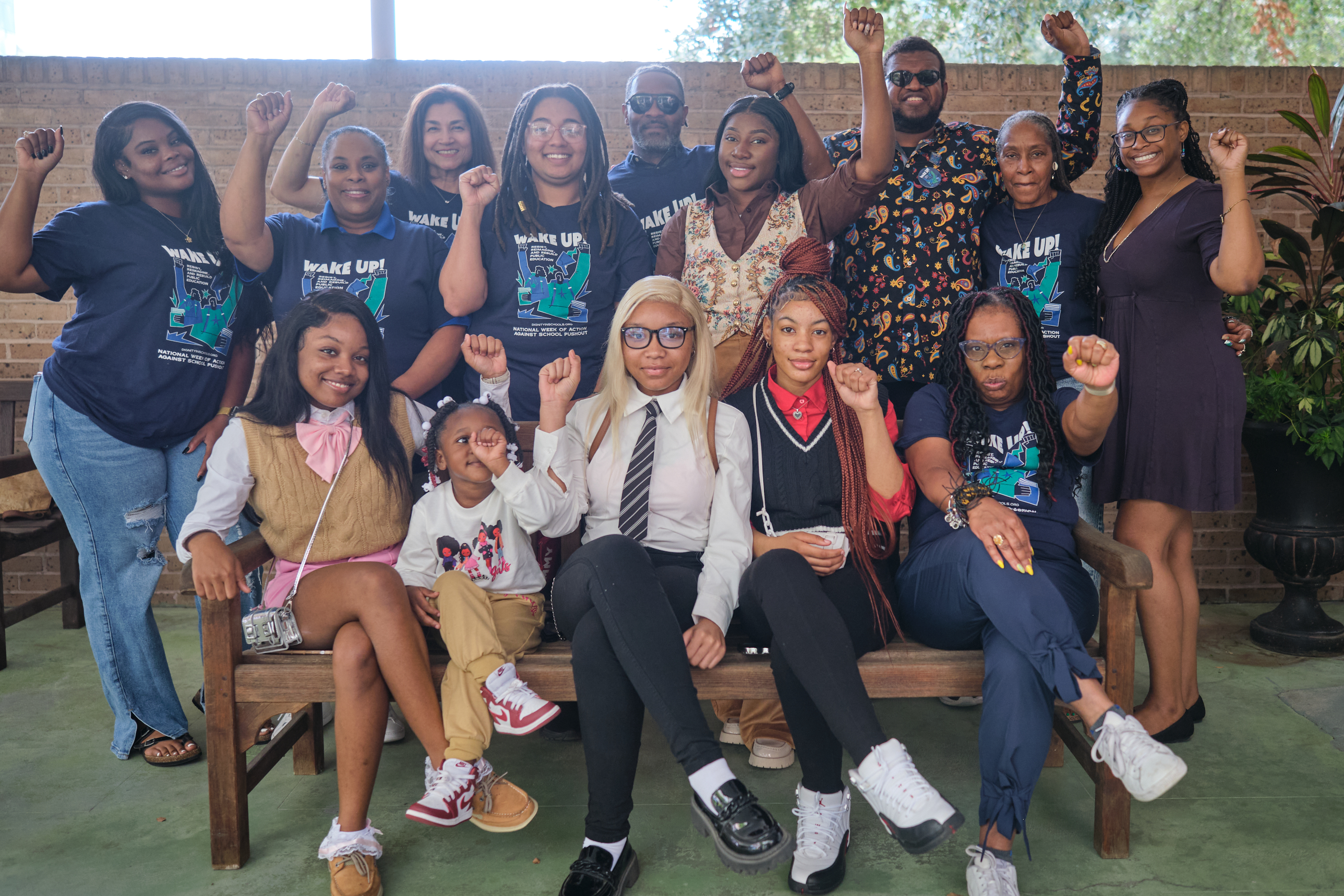
I hope the beginning of summer is providing opportunities to rest and recharge. Since finishing Hammer and Hoe last month, I’ve not stopped thinking of the critical & complicated role played by coalitions in socialist organizing. As I elaborate on my thoughts below, I invite you to become a sustainer of the twentieth anniversary fundraising effort of the Dignity in Schools Campaign.
*****
In Part II of Hammer and Hoe, specifically Chapter 6, Dr. Robin D.G. Kelley reflects on the presence of the Popular Front in Alabama. As the devastation of the Great Depression spread across the American South in the 1930s, the prominence of the Communist Party unfortunately waned. Although the party continually demonstrated its radical politics, rooted in racial justice, membership numbers dwindled, and punitive state tactics increased. For example, the party’s support of a strike of Birmingham’s laundry workers, involving twelve hundred to fifteen hundred Black women, resulted in stunning violence against the workers and party members. Comrades can only take so much.
Facing these conditions, the Communist Party expanded its net in 1935 to “include liberals and all progressive forces.” As this broader coalition emerged, the party widened its messaging. The leadership of the party, in response to Italy’s invasion of Ethiopia in 1935, “elected to drop its slogan of self-determination in the black belt and concentrate on civil rights and discrimination as unifying issues in the black community.” Such alliances sustained the party for a bit longer, but history ultimately played out in a damning way for the twentieth century Communist Party in the United States. One such unit of this alliance was the NAACP. Despite leaders of the legacy organization decrying communism and refusing to directly address the exploitation that Black people endure under capitalism, many radicals eventually found themselves within the ranks of the NAACP ninety years ago. The NAACP adopted direct action tactics, gained popularity, and saw its numbers grow where the Communist Party’s fell.
This portion of the book inspired so many thoughts. From 2016 to 2026, I worked at three American non-profits as I sought to dismantle the school-to-prison pipeline. Across this time, coalitions consistently informed my efforts. In 2017, I first encountered the Dignity in Schools Campaign and commenced my service on its coordinating committee. Later that year, I connected with advocates in New York who sought to enshrine legislative changes in state law that would have limited exclusionary discipline and incorporated more restorative practices in classrooms. I began journeying to New York City and Albany a few times a year – and ultimately became a facilitator of the group. A few years later, in 2020, I started a coalition at Texas Appleseed – in collaboration with education justice organizers at other 501(c)3 organizations – to respond to the unique detrimental effects of the coronavirus pandemic on public schools in the state. That coalition morphed into one that focused on legislative work, across various sessions, to end exclusionary discipline & school policing Texas. I also rejoined the coordinating committee of the Dignity in Schools Campaign in 2022.
With history and my own life in focus, I am admittedly conflicted. I was so inspired reading Hammer and Hoe, feeling a kinship with thousands of comrades nearly a century ago who organized under the banner of the Communist Party. I wish the party could’ve continued its growth trajectory then. However, I realize why the comrades ultimately chose to forge alliances, even if the strength of the Communist Party wasn’t guaranteed after a certain point. It was – and remains – important for the radical ideas to live on wherever they can receive oxygen. Given all that has occurred in the world in the past two centuries alone, I certainly empathize with people who are reluctant to claim communism & socialism as a personal political framework. Coalitions provide a helpful way to connect, even when people disagree on certain terms.
Presently, I recognize how many coalitions can get bogged down with administrative obligations, struggles with authentic democratic engagement, and uneven resources across individual member-organizations. As I departed from the coalition in New York, I forgot to transfer ownership of the Google Group to another comrade in the space. I could only hope that this hiccup of logistics wasn’t too disruptive. As a big guy with a large personality, I’m also wary of taking up too much space in coalitions. These realities of my past deeply inform my current job as co-chair of the Austin Chapter of the Democratic Socialists of America.
Despite it all, I still feel drawn to the work of maintaining & strengthening coalitions. The Dignity in Schools Campaign grounded me early in my legal career and conferred important political education upon me. Through my organizing with Austin DSA, I have been consistently impressed by our work with the Austin for Palestine Coalition. From weekly Palestinian flag drops from the 12th Street bridge above I-35 to community teach-ins, I currently see how coalition politics can effectively pave the road to a better world. Although I don’t have all the answers about coalitions, I lean into their possibilities to bring more people into socialist organizing, drawing us ever closer to true human dignity for all.
Discover more from Andrew Reginald Hairston
Subscribe to get the latest posts sent to your email.


 Andrew Reginald Hairston